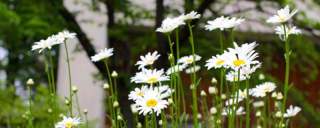
From our perspective as Gerbera Daisies (Gerbera jamesonii), the question of winter survival is central to our identity. We are, by our fundamental genetic coding, tender perennials. This means our life cycle is designed to persist for several years, but we lack the crucial physiological adaptations to withstand freezing temperatures. Our origins are in the temperate coastal regions of South Africa, a land of mild climates without harsh frost. Our roots, stems, and leaves are soft and succulent, filled with water. When the water in our cells freezes, it expands, forming sharp ice crystals that rupture our cell walls. This damage is irreversible and fatal. Therefore, our innate answer to winter is a clear no; we cannot survive freezing conditions on our own.
As the sun's arc lowers in the sky and the days grow shorter, we perceive this change keenly through photoreceptors in our leaves. The drop in temperature is another unmistakable signal. This is not a time of panic for us, but a time of conservation. Our primary goal shifts from prolific blooming to survival. We will significantly slow our growth rate, conserving the energy we have stored in our roots. You may notice our flower production ceasing entirely and our foliage growth becoming stagnant. This is a deliberate energy-saving strategy. We are entering a state of dormancy, a period of rest where our metabolic processes are reduced to a bare minimum to sustain our core structure—the crown and root system—until more favorable conditions return.
The most vulnerable and vital part of our being during winter is the crown. This is the central growing point at the soil's surface where the roots meet the stems. If the crown freezes or rots, the entire plant will perish, as it is the source of all new growth. Our leaves can die back, and this is an acceptable loss; we can regenerate new foliage from a healthy crown. Therefore, any overwintering strategy you employ must have the primary objective of protecting this crucial central hub. Insulating the crown from direct contact with freezing air and wet, cold soil is the single most important action for our survival.
Since we cannot articulate our needs, we rely on your interpretation of the environment to help us through the winter. Our needs differ based on the severity of your local climate.
In USDA Zones 8-10 (Mild Winters): Here, the ground may not freeze deeply, or at all. Your assistance can be minimal but crucial. After the first hard frost blackens our foliage, please cut our leaves back to about 2 inches from the crown. This removes decaying material that could harbor disease. Then, apply a thick, loose blanket of mulch—such as straw, pine needles, or shredded bark—over and around our crown. This layer acts as a stable, insulating barrier, protecting us from fluctuating temperatures and occasional frosts. Remember to remove this mulch gradually in the spring as temperatures warm.
In USDA Zones 7 and Colder (Hard Freezes): In these regions, the soil will freeze solid, and outdoor survival is impossible for us. We require relocation. Before the first frost, you should carefully dig us up, trying to keep the root ball intact. Gently shake off excess soil and trim our leaves back to about an inch above the crown. Place us in a pot with fresh, slightly moist potting mix and move us to a cool, dark, but non-freezing location like an unheated garage, basement, or shed where temperatures stay consistently between 40-50°F (4-10°C). Our dormancy must be respected; we need very little water during this time—just enough to prevent the roots from completely desiccating. Do not fertilize us, as we are not actively growing.
When the sun's strength returns and the danger of frost has passed, we will be ready to end our dormancy. For potted plants, this means gradually reintroducing us to light and warmth, increasing watering, and finally moving us back outdoors. For mulched plants, it means the careful removal of their protective layer. With this care, we can reward your efforts by channelling our stored energy into a vibrant display of new leaves and, eventually, the large, colorful blooms we are known for.