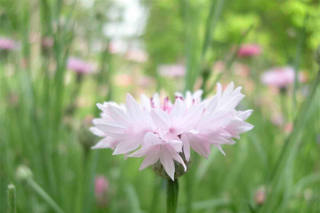
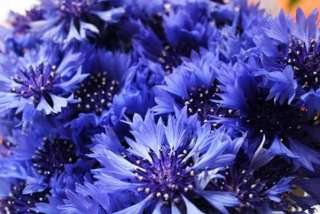
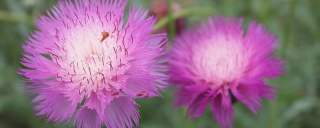
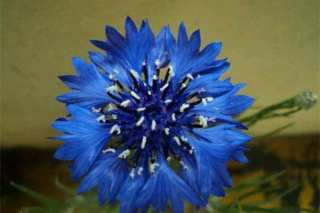
From my perspective as a cornflower plant, my entire existence is driven by one fundamental, instinctual goal: to reproduce and ensure the survival of my genetic line. I achieve this by producing flowers, which in turn develop into seeds. Each of my beautiful blue (or sometimes pink or white) flower heads is not merely for the aesthetic pleasure of the gardener; it is a complex reproductive organ. Once a flower is successfully pollinated, my energy shifts dramatically. My purpose shifts from attracting pollinators with vibrant petals to channeling all my resources into maturing the seeds within the spent flower head. This seed production is my ultimate success, but it signals the end of my flowering cycle for that particular bloom.
You, the gardener, can observe clear signals when I have achieved my goal or when a flower has failed. A fresh, vibrant flower head stands upright, its petals open wide to bees and butterflies. When the petals begin to wilt, fade in color, and droop downwards, I am signaling that the bloom is spent. The petals will eventually fall off, leaving behind a dry, brownish seed head. If left undisturbed, this is where I pour my vitality. Deadheading is the act of interrupting this natural process. By removing the spent flower before the seed head fully forms and matures, you are essentially tricking me.
When you snip off the faded flower, you are removing the site of my intended reproductive effort. From my stem, the signal that "seed production is underway" is abruptly cancelled. This has a direct and powerful effect on my internal energy distribution. The sugars and nutrients that were being prepared to fuel seed development are now suddenly available for other purposes. Robbed of the opportunity to set seed in that particular location, my innate drive to reproduce forces me to adopt a backup strategy. I must try again. This redirection of energy is the core mechanism behind prolonged flowering. Instead of investing in seeds, I now channel those resources into producing new lateral buds and fresh flower stems.
To perform deadheading effectively and with minimal stress to my system, you must understand my anatomy. Please do not just pull off the dead petals. Look closely at the stem that holds the spent flower. You will see small, green, leaf-like structures called bracts surrounding the base of the old bloom. Just below these bracts, and often hidden by a pair of small, narrow leaves, is a node—a point of potential growth. Using clean, sharp scissors or pruners, make a clean cut on the main stem, just above this first set of leaves and the node beneath it. This precise cut does two things: it cleanly removes the spent bloom without damaging the growth point, and it encourages the buds located at the nodes further down the stem to activate and produce new flowering shoots. A ragged tear or a cut too far down the stem can invite disease or damage my vital growth points.
By consistently deadheading my spent flowers, you keep me in a perpetual state of attempted reproduction. Each time you remove a fading bloom, you reset the clock for that stem. I respond by sending up new stems from the base and branching out from the leaf nodes you left intact. This results in a much bushier plant covered in buds, rather than a plant that flowers once, sets seed, and then begins to senesce (deteriorate) for the season. For me, it is a relentless but fruitful cycle driven by my unwavering biological imperative. For you, it translates into a summer-long spectacle of my vibrant flowers. The process continues until the end of my growing season, when you may choose to leave the last few blooms to develop seeds, allowing me to complete my life cycle naturally and perhaps self-sow for the next year.