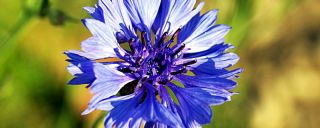
From the perspective of an indoor cornflower plant, the phenomenon you refer to as "leggy growth" or etiolation is not a disease but a survival strategy. It is our primary response to an environmental signal that is critically out of balance: insufficient light. When our light receptors, particularly phytochromes and cryptochromes, detect light levels below our metabolic needs, we initiate a series of physiological changes aimed at finding a more favorable light source.
Our most fundamental need is light energy for photosynthesis. In a dim indoor setting, the light intensity is often too low to produce enough sugars to support compact, robust growth. Our internal chemistry changes dramatically. We begin to produce higher concentrations of hormones called auxins in our shoot tips. These auxins promote cell elongation in the stems. Instead of investing energy in producing new leaves or strengthening cell walls, we direct our limited resources to rapidly lengthening our stem cells. This elongation is a desperate attempt to grow taller quickly, to push our apical meristem (the growing tip) above any potential shade-casting obstacles and into a brighter light environment. The internodes—the segments of stem between leaf sets—become abnormally long and weak because the cells are stretched out rather than multiplying and thickening.
This frantic search for light comes at a significant cost to our overall structure and health. The accelerated stem growth is fragile. The cell walls are thinner, lacking the sturdy cellulose and lignin deposits that would normally develop under adequate light. This makes us physically weak and prone to collapsing under our own weight. Furthermore, our leaves may become smaller, paler, and more widely spaced along the elongated stem. This is a direct result of the energy deficit; we cannot produce the chlorophyll and leaf tissue needed for efficient photosynthesis. The smaller leaf surface area further exacerbates the light-capture problem, creating a vicious cycle of energy deprivation.
Beyond simple intensity, the *quality* of light indoors is often problematic. Sunlight contains a full spectrum of wavelengths, including abundant red and blue light, which are crucial for our development. Blue light, in particular, is a powerful signal for suppressing stem elongation and promoting compact, bushy growth. Many artificial light sources and light filtered through windows lack the necessary intensity and spectral balance. When we detect a high ratio of far-red light to red light—a common condition in shaded or artificially lit areas—it further triggers the elongation response. We essentially interpret this spectral signal as being in deep shade, prompting us to stretch even more vigorously.
To reverse this leggy growth, you must address the core issue from our point of view. Providing a much brighter light source is the only true solution. Placing us directly in a south-facing window where we can receive several hours of direct sunlight is ideal. If natural light is limited, supplementing with a full-spectrum grow light placed just a few inches above our foliage can provide the necessary energy and, crucially, the blue light spectrum that tells our stems to stop elongating and start strengthening. While you can prune the leggy stems to encourage bushier growth from the base, this is only effective if the light conditions are simultaneously corrected. Otherwise, any new growth will simply become leggy again as we continue our search for the light we desperately need.