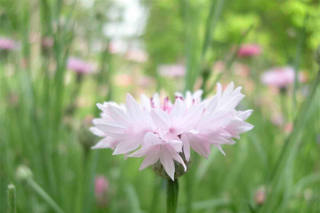
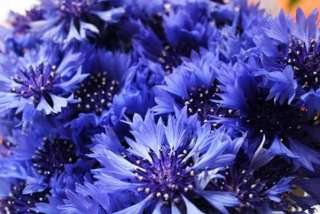
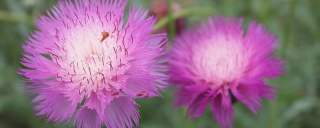
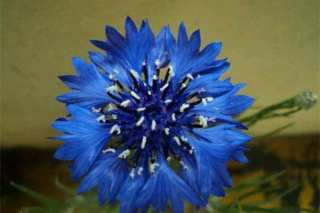
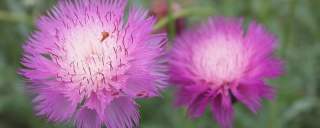
The plant commonly referred to as the cornflower in the United States is Centaurea cyanus, a member of the Asteraceae family. It is an annual flowering plant characterized by its slender, grey-green stems and striking, vibrant blue-ray florets that form a composite flower head. Botanically, it is not native to North America; it is indigenous to Europe, where it earned its name as a classic "weed" of grain fields (cornfields). It was introduced to the Americas, likely by European settlers who carried its seeds, either accidentally mixed with crop seeds or intentionally for their ornamental and nostalgic value. As an introduced species, the cornflower naturalized in parts of the continent, often found in meadows, along roadsides, and in disturbed soils, thriving in full sun. Its presence in the American landscape is therefore intrinsically linked to human migration and agriculture, a living relic of cultural exchange.
The symbolism of the cornflower in American culture is deeply rooted in its physical attributes and growth habits. Its most prominent feature, the intense blue color, is a rarity in the floral world. This unique hue has led to its primary association with delicacy, tenderness, and hope. The plant's resilience is another key characteristic; as a pioneer species that can grow in poor soils, it symbolizes perseverance, simplicity, and the ability to thrive in adversity. This combination of delicate beauty and rugged hardiness made it an appealing emblem for various groups. For instance, its ability to persist where it was planted mirrored the pioneer spirit of settlers making a life in a new land. Furthermore, its history as a flower of the grain fields connects it symbolically to fertility, bounty, and the agricultural heartland, even as its context shifted from European wheat fields to American plains.
The cornflower's symbolic journey in America is most notably marked by its political adoption. In the early 20th century, it was chosen as the official flower of the National Republican Party. This choice was not arbitrary but was directly inspired by a botanical event. The story recounts that President William McKinley, a Republican, often wore a cornflower in his buttonhole. When he was tragically assassinated in 1901, the flower became a symbol of his memory and, by extension, the party's values. Republicans wore the cornflower as a boutonniere to national conventions as a sign of party unity and to honor McKinley. In this context, the flower's symbolism expanded to represent loyalty, remembrance, and steadfastness in political belief. While this practice has waned in modern times, it remains a significant chapter in the flower's cultural history, demonstrating how a plant's symbolism can be formally institutionalized.
Today, the cornflower's primary presence in American culture is within the realm of horticulture and aesthetics. It is a popular choice in cottage gardens, wildflower meadows, and cutting gardens. Gardeners value it for its easy cultivation, drought tolerance, and the unparalleled blue color it brings to the palette of an American garden. Its use in floral arrangements continues its symbolic association with delicacy and refinement. The flower is also a favorite among pollinators like bees and butterflies, adding an ecological value that resonates with contemporary environmental consciousness. While its overt political symbolism has faded, its aesthetic and horticultural appeal ensures its continued presence. It persists as a symbol of simple, rustic beauty and resilience, a meaning that is accessible and appreciated without the need for formal historical or political knowledge.