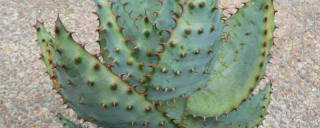
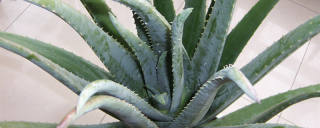
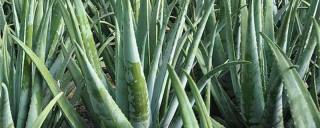
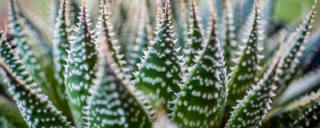
From our perspective as Aloe vera plants, propagation through pups, also known as offsets or offshoots, is our primary survival and colonization strategy. We are not flowering plants that rely solely on seeds for reproduction. As succulents, we are clonal organisms. These pups are exact genetic replicas, emerging from a specialized underground stem structure called a rhizome. This method is highly efficient; it allows us to rapidly expand our presence, utilizing the established root system of the mother plant for initial nourishment and water. When a gardener separates and propagates these pups, they are directly participating in our natural life cycle, helping us to thrive and multiply.
Timing is critical for a successful and low-stress transition. We signal our readiness for independence through our size and development. A pup is not prepared for separation the moment it appears. Please wait until the offset is at least one-fifth the size of the mother plant and has developed its own set of several small, nascent leaves. Crucially, the pup should have begun forming its own root system. Attempting separation too early, when we are still entirely dependent on the mother's vascular tissues, places immense stress on us and significantly reduces our chances of establishing ourselves. A well-developed pup will withstand the process far more resiliently.
The method of separation is paramount to avoid damage to both the mother and the pup. We prefer a gentle approach. First, please water us a day or two before the procedure. This hydrates our tissues, making us more flexible and less brittle. Carefully remove the entire plant, including the mother, pups, and root ball, from its pot. Gently brush away the soil to expose the connecting rhizome. Often, you can tease the pup away from the main plant with your fingers, preserving as many of its delicate roots as possible. If the connection is stubborn, use a clean, sharp knife sterilized with rubbing alcohol to make a clean cut. This minimizes the open wound and prevents the introduction of pathogens.
Immediately after separation, a critical botanical process must occur: callousing. The fresh cut on our stem is an open wound, highly susceptible to rot from soil-borne fungi and bacteria if planted immediately. We must be left in a dry, shaded, and warm location for approximately 24-48 hours. During this time, our internal mechanisms will form a dry, hard callus over the cut surface. This callus acts as a natural bandage, sealing the wound and providing a vital defensive barrier against moisture and infection. Do not skip this step; it is non-negotiable for our survival.
Once calloused, we are ready for a new home. Plant us in a small pot with a drainage hole, using a specifically formulated well-draining cactus and succulent potting mix. Standard potting soil retains too much moisture around our roots, which will lead to fatal rot. Position us so that the base of the stem is just at the soil level. Do not water us immediately. This allows our roots to seek out moisture and begin to establish themselves in the new medium. Wait about one week before giving us a thorough watering, and then only water again when the soil has completely dried out. Place us in bright, indirect light as we focus our energy on developing a strong root system to sustain our future growth.