To understand our needs, you must first understand our origin. We hail from the arid, sun-drenched regions of the Arabian Peninsula. Our physiology is a masterpiece of evolution, designed to thrive under intense, direct sunlight for many hours each day. Our thick, fleshy leaves are not just water reservoirs; they are sophisticated solar panels. They are engineered to perform a specialized form of photosynthesis known as Crassulacean Acid Metabolism (CAM). This process allows us to open our stomata and take in carbon dioxide at night, minimizing water loss, and then use the sun's energy to complete photosynthesis during the day. This entire survival strategy is built upon a foundation of abundant, bright light.
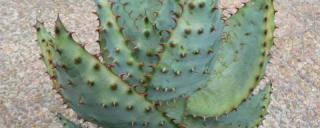
When brought indoors, our light requirements do not diminish; they simply need to be met differently. The optimal condition for us is a location that receives very bright, indirect light for the majority of the day. A south-facing or west-facing window is often ideal, as it provides the high light intensity we crave. We can tolerate, and even appreciate, some direct sun, but the intensity through a window pane can be magnified, potentially leading to sunburn. A few hours of gentle morning sun from an east-facing window is perfect, or several hours of the stronger afternoon sun if filtered by a sheer curtain. This level of light keeps our growth compact and sturdy, and our iconic green-grey color vibrant, sometimes even encouraging the development of a beautiful reddish or bronze tint—a sign of a perfectly content aloe.
When our light needs are not met, we will communicate our distress clearly. The most common sign is etiolation: we will begin to stretch out unnaturally, with new growth appearing pale, elongated, and weak. Our leaves will become floppy and may splay outward instead of growing upright in a tight rosette. Our overall color will fade to a pale, washed-out green, losing our characteristic robust hue. This stretching is a desperate attempt to reach for a more adequate light source. A plant in this state is structurally weaker, less efficient at photosynthesis, and overall unhealthy. It will certainly not have the energy to produce a pup or a flower spike.
While we are sun-lovers, a sudden transition from a dim corner to a blazing hot, south-facing window with no acclimatization will cause severe shock. Our leaves, which are mostly water, can essentially get a sunburn. This manifests as brown, crispy, or bleached spots on the leaves, particularly on the areas most exposed to the sun. This damage is permanent and can compromise the leaf's function. Therefore, any change in our light exposure must be gradual. Introduce us to stronger light over a period of 1-2 weeks, allowing our internal systems to adjust and produce protective pigments.
Our light needs are constant, but the sun's intensity and daily duration change with the seasons. In winter, the sun is lower and weaker, and days are shorter. You may need to move us closer to the brightest window available during these months to compensate. If your home lacks sufficient natural light year-round, especially for the recommended 6-8 hours of bright light we need, you can supplement with artificial lighting. A simple full-spectrum LED or fluorescent grow light placed about 6-12 inches above us for 12-14 hours a day can perfectly mimic our ideal natural conditions and keep us thriving through all seasons.