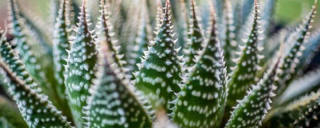
From the perspective of the Aloe vera plant, the question of using regular potting soil is fundamentally about whether that environment supports its core physiological needs. As a succulent, Aloe vera has evolved specific adaptations for survival, and its potting medium must respect these traits rather than work against them.
The single most critical requirement for an Aloe vera's health is a potting mix that provides excellent drainage and dries out relatively quickly. This need is rooted in the plant's xerophytic nature. Its thick, fleshy leaves are water storage organs, allowing it to endure prolonged periods of drought. Its root system is adapted to absorb water rapidly when it is available but is highly susceptible to rot if left sitting in moisture. Regular potting soil is typically formulated to retain water for longer periods to support moisture-loving plants. For an Aloe vera, this water-retentive environment creates a constant threat of root suffocation and fungal diseases, as the roots cannot access the oxygen they need.
Regular potting mixes are often high in organic matter like peat moss or coir, which are excellent at holding onto water. While this is beneficial for many plants, for an Aloe vera, it is a primary cause of stress and decline. When planted in such a medium, the soil retains moisture around the roots for far too long after watering. This leads to a condition called "wet feet," where the roots begin to decay. As the root system fails, it can no longer deliver water and nutrients to the plant, leading to symptoms like mushy, soft leaves that may turn yellow or brown and eventually collapse. Ironically, the plant begins to drown and starve because its environment is too wet.
The ideal potting medium for an Aloe vera should replicate the well-draining, gritty, and low-organic matter conditions of its native arid and semi-arid habitats. This environment ensures that water flows through the soil immediately, hydrating the roots but leaving ample air pockets behind. A suitable mix prioritizes inorganic components that provide structure and drainage over water-retaining organic ones. Key ingredients include coarse sand, perlite, pumice, or small gravel. These particles create large pores in the soil, preventing compaction and ensuring that water and air can move freely. A small amount of organic material, such as a cactus potting mix, can be included to provide some nutrient retention, but it should not be the dominant component.
Therefore, from the plant's point of view, regular potting soil is an unsuitable and potentially hazardous choice. It directly conflicts with the Aloe vera's evolutionary design and creates a high-risk environment for fatal root rot. For the long-term health and stability of the plant, it is strongly advised to either use a pre-mixed succulent or cactus potting soil or to create a custom blend. A simple and effective recipe is to amend regular potting soil with a large proportion of perlite or coarse sand (a 1:1 ratio is a good starting point) to drastically improve its drainage properties and create a home where the Aloe vera's roots can thrive.