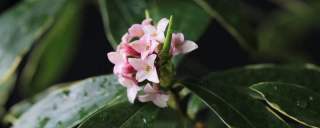
From my perspective as a Daphne seed, I must warn you that my path to becoming a plant is a test of patience. I possess a complex dormancy mechanism, a deep physiological sleep that prevents me from germinating until specific conditions are met. I require a prolonged period of cold stratification, mimicking a full winter, to break this dormancy. This means you must place me in a moist medium, like sand or peat, and store me in a refrigerator for approximately three to four months. After this cold treatment, when planted in warm, well-draining soil, I may finally awaken. However, my growth is notoriously slow and unpredictable; genetic variation means I will not be a true clone of my parent plant. This method is for the truly patient gardener.
If you wish to replicate a specific, beloved plant exactly, then taking a cutting from me is the far superior method. This allows you to create a genetic duplicate, preserving the exact flower color, fragrance, and growth habit of the parent. The best time for this is in late summer when my current season's growth has begun to mature and harden slightly—what you call semi-ripe wood. My stems are firm yet still flexible at the base. Please use a sharp, sterile blade to make a clean cut; a ragged tear invites pathogens that could kill me.
To give me the best chance, prepare a cutting about 4-6 inches long from a healthy, non-flowering shoot. Make the cut just below a leaf node, as this is where my root-forming hormones are most concentrated. Gently remove the leaves from the lower half of my stem to reduce moisture loss. I greatly benefit from a gentle wounding of my lower bark and a dip into a rooting hormone powder. This isn't magic; it simply supplements my natural auxins, encouraging the rapid formation of adventitious roots. Plant me in a free-draining medium, such as a 50:50 mix of perlite and peat. My most critical need is consistent humidity. I must be kept under a plastic dome or in a mist propagator to prevent desiccation, as I have no roots yet to take up water.
Whether I emerge from a seed or a cutting, my young root system is incredibly delicate. I demand perfect drainage; waterlogged conditions will cause my roots to rot and I will perish. Please plant me in a pot with excellent drainage holes and a slightly acidic, loamy soil. Position me in dappled sunlight or partial shade, sheltered from harsh afternoon rays and strong winds. Do not over-fertilize me; a gentle, diluted feed in the growing season is more than enough. I am a slow grower by nature and do not respond well to being forced. With careful attention to my moisture and light needs, I will eventually establish myself and reward you with my exquisite fragrance.