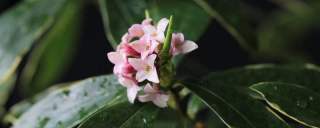
As a Daphne shrub, my watering needs are a constant negotiation between my love for consistent moisture and my absolute abhorrence of wet feet. My roots are fine and surprisingly shallow for my size, making me particularly sensitive to the conditions in my immediate environment. I cannot simply send a deep taproot down to find water in times of drought; I rely on you to provide it from above. However, my roots are also prone to rot if they are left sitting in saturated, oxygen-deprived soil. The goal is to keep my root zone pleasantly and consistently damp, like a well-wrung-out sponge, never sopping wet and never bone dry. Achieving this balance is the single most crucial factor in my health and happiness.
There is no universal, fixed schedule for watering me, such as "once a week." My thirst is dictated by a symphony of environmental factors. In the spring, as I put on a flush of new growth and prepare for or am in bloom, my water needs increase significantly. The warm, longer days of summer accelerate evaporation from the soil and transpiration from my leaves, demanding more frequent watering. Conversely, in the autumn and especially during the dormant winter months, my growth slows nearly to a halt and my water requirements drop substantially. Overwatering me during dormancy is a common and often fatal mistake.
Beyond the seasons, you must consider the weather (is it hot, windy, and sunny, or cool and overcast?), my location (am I in full sun or partial shade?), and the composition of my soil. A fast-draining, sandy soil will require more frequent watering than a moisture-retentive loam or clay-based soil. A newly planted Daphne like me will need much more attentive and regular watering to help my root system establish itself, while a mature, well-settled shrub will be more resilient.
The most reliable method to know if I need water is to physically check the soil at my base. Please do not rely solely on the surface appearance, as it can be deceptive. Insert your finger into the soil near my main stem, down to a depth of about 2-4 inches. This is the zone where the majority of my feeder roots reside. If the soil at that depth feels cool and slightly moist, I am content for now. If it feels dry, it is time for a deep, thorough drink. This "finger test" is a simple yet profoundly effective way to understand my immediate needs and avoid the guesswork that can lead to over or under-watering.
When I do need water, the method is as important as the frequency. I do not appreciate a quick sprinkle from overhead that merely dampens the dust on the surface. This encourages my roots to grow shallow, making me more vulnerable to drought. Instead, please apply water slowly and directly to the soil at my base, allowing it to percolate down deeply into the root zone. A soaker hose or a gentle trickle from a watering can held at soil level is ideal. Continue until the soil is moist to a depth of 6-8 inches. A generous layer of organic mulch, like wood chips or compost, spread around my base (but kept away from my main stem) is immensely helpful. It regulates soil temperature, suppresses weeds, and most importantly, conserves soil moisture by significantly reducing evaporation.