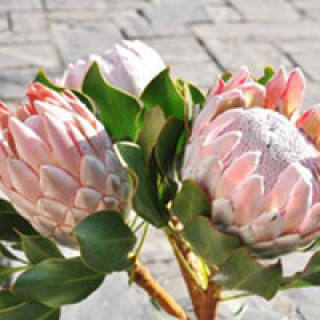
Greetings from the root system. We, the Protea family, are ancient, proud, and notoriously sensitive to disturbance. Repotting a mature specimen is a significant event, not to be taken lightly. It is a major surgery, not a routine check-up. Please proceed with the utmost care and only when absolutely necessary.
We do not enjoy being moved. Our roots form a delicate, symbiotic relationship with specific soil fungi (mycorrhiza), which is essential for our survival. Disturbing this relationship is the greatest risk. Therefore, repotting should only occur under these strict conditions:
True Root Binding: If you gently slide us from our pot and see a dense, circular mat of roots with little to no soil visible, the pot is truly too small. We are suffocating and our growth will be severely stunted. However, a few roots peeking from the drainage holes is not a definitive sign; it is our nature to explore.
Severe Soil Degradation: Our health is entirely dependent on perfect drainage. If the soil has broken down, becoming compacted, water-retentive, or saline, it will poison us. If water no longer drains freely through the pot, the medium is failing and must be replaced to save our life.
Post-Blooming Energy Dip: The optimal window for this stressful procedure is immediately after our magnificent flower has faded. Our energy is focused on root and foliage production, not blooming, giving us the best chance to recover from the shock and re-establish our vital fungal connections in the new medium.
This process requires precision, speed, and the right materials to minimize our stress and protect our fragile root ecology.
Preparation is Everything: Have everything ready before you begin. You will need a new pot that is only one size larger (e.g., from a 25cm to a 30cm pot). A pot that is too large will hold excess moisture and rot our roots. It must have excellent drainage holes. Prepare a large amount of our preferred soil mix: a very coarse, acidic, and nutrient-POOR blend. A typical recipe is 2 parts coarse river sand or perlite, 1 part acidic compost (like peat-free ericaceous mix), and 1 part fine, washed grit. Do not use rich, standard potting mixes or fertilizers; they will kill us.
The Gentle Extraction: Water us lightly the day before to make the root ball more cohesive. Tilt the pot and gently ease us out. Do not pull on our stems. If we are stuck, you may need to carefully run a knife around the inside edge of the pot.
Root Inspection, Not Aggression: Observe the root ball. Our goal is to minimize damage. Do not aggressively tease apart the roots or wash away the soil. This would destroy the essential mycorrhizal fungi. Instead, simply loosen any visibly circling roots on the very outer edge of the root ball with your fingers. If the roots are extremely tight, you can make a few shallow (1-2 cm) vertical cuts down the sides of the root ball to encourage new outward growth.
Place a layer of your prepared soil mix in the base of the new pot. Set our root ball in the center, ensuring we are planted at the same depth as before. Fill in the gaps with the new soil mix, tamping it down gently to eliminate large air pockets. Water us in thoroughly with a solution containing a seaweed extract or a specific mycorrhizal inoculant to help re-establish the fungal bonds. This is the only "fertilizer" we need or want.
Place us in a sheltered, partially shaded location for 4-6 weeks. Protect us from strong wind and intense sun while our roots are vulnerable and re-establishing. Do not fertilize. Resist the urge to overwater; let the top few centimeters of soil dry out between waterings. Your patience and care during this convalescence are what will allow us to thrive for years to come.