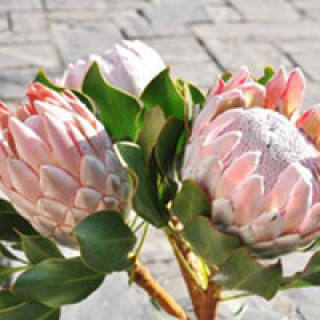
We Proteas are a family of plants, primarily from South Africa and Australia, renowned for our bold, architectural flowers. To understand our needs, you must first understand our origins. The majority of South African species, like the iconic King Protea (*Protea cynaroides*), hail from a Mediterranean-type climate. This means we are adapted to warm, dry summers and cool, wet winters with excellent drainage. We thrive in acidic, nutrient-poor soils and are accustomed to full, blazing sun and consistent airflow. USDA Zone 8 presents a significant challenge because of its winter lows, which can dip between 10°F and 20°F (-12°C to -7°C). This is far colder than what most of us can tolerate without protection.
For us, the cold itself is only part of the problem; the combination of cold and wet is often fatal. Our roots are highly susceptible to rot in cold, waterlogged soil. Our fine, surface-level root systems are designed to absorb moisture quickly from well-draining substrates, not to sit in chilly, saturated earth. In Zone 8, a wet winter freeze can be a death sentence, even if the air temperature doesn't reach the absolute minimum for our species. Therefore, your success hinges not just on protecting our foliage from frost, but on guaranteeing perfect drainage to protect our roots from rot.
Not all Proteas are created equal in the face of cold. You must be selective. Some species and modern hybrids possess a greater degree of cold tolerance and offer your best chance of success. Look for the hardier members of our family. The Pineapple Protea (*Protea barbigera*) and the Duchess Protea (*Protea eximia*) are known to handle cooler conditions. Furthermore, hybrid cultivars like *Protea* ‘Venus’, ‘Pink Ice’ (*Protea nerifolia* x *susannae*), and *Protea* ‘Sylvia’ (a cross involving *grandiceps* and *eximia*) have been bred for improved vigor and slightly better cold tolerance, sometimes surviving brief dips into the low 20s°F (-6°C) when established and well-sited.
To give us a fighting chance in Zone 8, you must meticulously manage our environment. Our survival depends on it. First, **planting location is paramount**. We demand a south or west-facing slope that receives maximum sun exposure and has perfect air circulation to mitigate frost. The **soil must be aggressively amended** for drainage. Create a large planting mound or raised bed using a mix of coarse sand, fine gravel, and acidic planting mix like one formulated for azaleas and camellias. **Never plant us in heavy clay.** A thick layer of coarse mulch like wood chips helps keep our roots cool and moist in summer but must be kept away from the crown to prevent rot. **Water deeply but infrequently**, allowing the soil to dry out between waterings, and cease feeding with phosphorus-rich fertilizers, which are toxic to us.
Even with the hardiest selection and perfect drainage, winter in Zone 8 will require active intervention on your part. When hard freezes are forecast, you must be prepared to protect us. Erecting a temporary frame covered with frost cloth can shield our foliage from freezing winds and radiant frost. For smaller specimens, a simple covering can make a significant difference. The most critical protection, however, remains at the root zone. A thick, dry mulch like straw or pine needles piled over our root zone (again, away from the stem) can provide those extra few degrees of insulation that keep our roots alive.