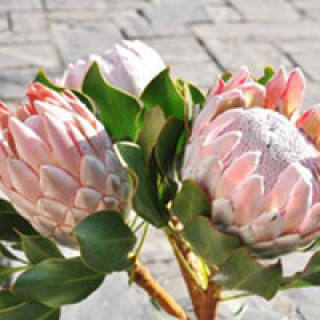
For gardeners in Mediterranean climates like California's, selecting the right Protea varieties is crucial for success. These plants hail from similar ecosystems in South Africa and Australia, and their survival hinges on specific adaptations to dry, nutrient-poor conditions. The key is choosing species whose evolutionary traits align perfectly with the local environment.
Most Proteaceae species form dense clusters of fine, lateral roots known as proteoid roots. These specialized structures are highly efficient at scavenging scarce nutrients, particularly phosphorus, from impoverished soils. This is a critical adaptation, as they are extremely sensitive to high levels of phosphorus found in many common fertilizers and rich soils. For the plant, a well-drained, acidic, and gritty soil mixture is not just preferred—it is essential for preventing root rot and nutrient toxicity, which are often fatal.
The leaves of drought-tolerant Proteas exhibit xerophytic characteristics designed to minimize water loss. Many have tough, leathery (sclerophyllous) leaves with a thick cuticle. Some varieties display a greyish or silvery hue, which is often due to a dense covering of fine hairs that reflect harsh sunlight and reduce transpiration. The leaf orientation is also often vertical, minimizing direct sun exposure during the hottest parts of the day. These features allow the plant to conserve precious water reserves during long, dry summers.
Several varieties stand out for their exceptional adaptation to dry climates.
Protea cynaroides (King Protea): This species possesses a massive, deep root system that allows it to access deeper water tables. Its large, leathery leaves are well-equipped to handle sun and wind.
Protea neriifolia (Oleander-leaf Protea): Its narrow, sclerophyllous leaves have a reduced surface area, which is a classic adaptation for limiting transpiration. It is also one of the more resilient species to varying conditions once established.
Leucospermum cordifolium (Pincushion Protea): This genus features those characteristic grey-green, hairy leaves that are highly reflective and excellent at conserving moisture. They are perfectly suited to full sun exposure in coastal climates.
Leucadendron salignum (Sunshine Conebush): This species is remarkably drought-tolerant. Its colorful bracts are actually modified leaves, and the plant's overall structure is designed to thrive in well-drained, sandy soils with minimal water.
From the plant's perspective, correct placement is paramount. They require full sun for at least six hours a day to photosynthesize efficiently and produce their spectacular blooms. Air circulation is another critical factor; stagnant, humid air can create an environment conducive to fungal diseases like root rot, to which these plants have little resistance. Planting on a slope or mound is often beneficial, as it mimics their native hillside habitats and ensures perfect drainage. Deep, infrequent watering encourages the roots to grow downward, seeking moisture and building a more resilient, drought-tolerant structure.