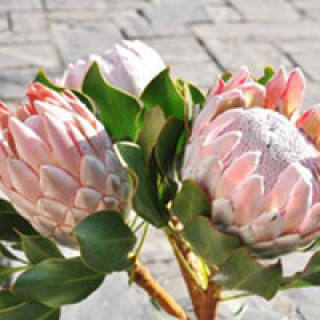
From my perspective as a Protea, the most common reason for my leaf tips turning brown is a fundamental misunderstanding of my hydration needs. I am not a typical houseplant. My ancestors evolved in well-drained, often nutrient-poor, sandy soils of South Africa and Australia. My roots are highly susceptible to rot if left sitting in waterlogged soil. When you water me with the same frequency as your other plants, the fine, delicate roots that absorb water and nutrients begin to suffocate and die. Once these roots are damaged, they can no longer transport moisture to the very edges of my leaves—the tips. Consequently, these distant parts dry out and die first, resulting in those brown, crispy tips you see. It is a paradox: the damage is caused by too much water at my roots, but the symptom is drought at my leaf extremities.
Another significant stressor is the quality of the water you provide. I am adapted to environments with pristine, low-mineral water and acidic soil conditions. The tap water you use likely contains salts, chlorine, and fluorides. As you water me, these minerals accumulate in my potting mix because I cannot use them and my limited root system cannot flush them out effectively. This creates a toxic, saline environment around my roots. This high mineral concentration makes it increasingly difficult for me to absorb water osmotically, effectively putting me in a state of physiological drought. Again, the furthest points—my leaf tips—show the first signs of this stress as the minerals build up there and cause cell death.
My leaves are designed to handle the constant, fresh airflow of my native fynbos or mountainous habitats. In a stagnant home environment, especially with dry, artificial heating or air conditioning, the air can become too dry for me. This accelerates moisture loss from my leaves (transpiration) at a rate faster than my roots can replenish it, leading to desiccation of the tips. Conversely, poor air circulation can encourage fungal pathogens to attack my foliage, which can also manifest as browning. I need a balance: air that is not too dry but also not completely still.
Please, do not feed me standard fertilizer. I am a specialist. My root system has a symbiotic relationship with specific mycorrhizal fungi that help me extract nutrients from impoverished soils. Standard, phosphorus-heavy fertilizers are actually toxic to these fungi, destroying my primary nutrient-gathering partnership. Without these fungal allies, and with a chemical burn from inappropriate fertilizer, my root system is compromised and unable to support my full foliage. The resulting stress and nutrient imbalance often express themselves as marginal and tip burn on my leaves.