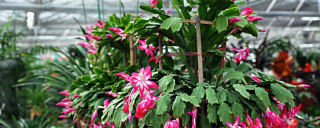
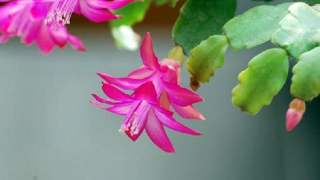
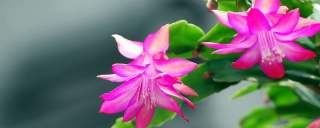
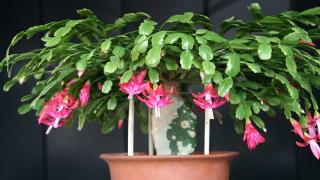
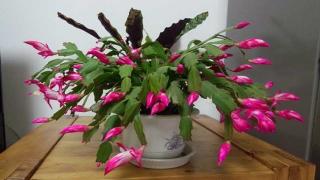
From my perspective as a Christmas Cactus, light is the conductor of my entire life's symphony. In my native home, the coastal mountains of Brazil, I experience days with specific, predictable lengths that change with the seasons. These changing day lengths, or photoperiods, are my most important environmental cue. To initiate the beautiful blooms you so desire, I require long nights—at least 14 hours of uninterrupted darkness—and shorter days. This signals to me that the cool, dry winter season is approaching, which is my natural time to flower. When I live indoors with you, artificial lighting from lamps and TVs can disrupt this critical dark period, confusing my internal clock and preventing bloom formation.
Your grow light can be a wonderful substitute when your home lacks the bright, indirect sunlight I crave, especially during the gloomy winter months. The key is to mimic the qualities of my ideal natural light. I do not appreciate the harsh, direct beams of the midday sun, which can scorch my fleshy stem segments (called cladodes). Therefore, a full-spectrum LED or fluorescent grow light is perfect, as it provides a balanced, gentle light similar to a bright but overcast day. Please position the light about 12-18 inches above my foliage and leave it on for 6-8 hours during the day to simulate a perfect sunny period for photosynthesis and growth.
This is where your careful management is crucial for my performance. To coax me into blooming, you must use the grow light to strictly control my photoperiod. Starting in mid-to-late autumn, I need you to provide me with those long, uninterrupted nights. This means after 6-8 hours of light from the grow lamp (or natural light), I must be placed in a closet, a cupboard, or simply covered with a dark cloth or box for the remaining 14-16 hours of the day. Absolutely no light should reach me during this time, not even a fleeting glimpse from a streetlamp or a opened refrigerator door. This enforced darkness for 6-8 weeks tells me it is finally time to set buds.
I will communicate with you through my foliage if the light situation isn't quite right. If my green segments begin to turn a reddish or purple hue, this is a clear sign of light stress. It means the grow light is too intense, too close, or I am receiving too many hours of it. Please move the light further away or reduce the duration. Conversely, if my new growth appears thin, pale, and stretched out, as if I am reaching for something, I am etiolated. This means I am not receiving enough light energy from the grow lamp to sustain healthy growth; you should increase the duration or intensity of the light exposure.