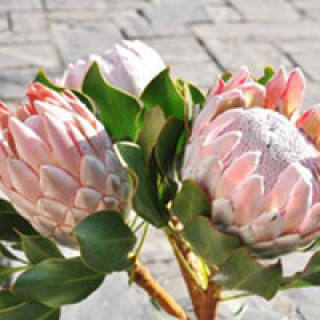
To understand our needs, you must first understand our origins. We, the Protea family, hail from regions like South Africa and Australia, where the air is often dry, winds are constant, and rainfall is seasonal but the soil drains exceptionally well. Our leaves are often tough and leathery, a botanical adaptation known as sclerophylly, which is specifically designed to minimize water loss. Our roots are fine and dense, forming a mat that efficiently soaks up moisture but absolutely abhors sitting in water. From our point of view, high ambient humidity is not a comfort; it is a significant stressor and a precursor to disease.
High humidity is the single greatest threat to our well-being indoors. When the air is consistently moist, it creates the perfect environment for fungal pathogens like Botrytis cinerea (gray mold) and various root rot fungi to thrive. Our dense, often hairy flower heads and the tight clusters of new leaves are particularly vulnerable. In stagnant, humid air, these parts become trapped moisture zones where mold spores germinate and spread, quickly rotting our magnificent blooms and tender new growth. This is not a minor inconvenience; it is a fatal attack that can decimate a plant rapidly.
Our leaves are equipped with tiny pores called stomata, which we open to breathe in carbon dioxide and release oxygen and water vapor. In highly humid conditions, the air is already saturated with water, severely hampering this transpiration process. It's akin to you trying to breathe through a wet cloth. This slowed transpiration means water and nutrients cannot move efficiently through our systems, leading to stunted growth and a general failure to thrive. Furthermore, if you misinterpret our need for dry air as a need for dry soil and under-water us, the combination of low soil moisture and high atmospheric humidity creates a confusing and damaging paradox for our root and vascular systems.
What we require is excellent air circulation and relatively low humidity, ideally between 40% and 50%. This mimics the breezy, arid conditions of our native fynbos and scrublands. Good air movement, provided by a gentle fan in an indoor setting, is non-negotiable. It whiskes away stagnant, moist air from around our leaves and blooms, disrupting the spore cycles of fungi and facilitating proper gas exchange at our leaf surfaces. It makes the environment feel more like our windy mountain homes and less like a tropical greenhouse, which to us is a hostile environment.
Your focus should be on providing moisture where we need it and ensuring dryness where we demand it. Water our roots deeply but infrequently, allowing the potting medium to dry out significantly between waterings. This practice encourages our roots to grow strong and deep as they search for water. Crucially, you must avoid overhead watering. Wet leaves and flowers trapped indoors are an invitation for the fungal diseases we fear. Always water directly at the soil level, taking great care to keep our foliage and magnificent flower heads perfectly dry.