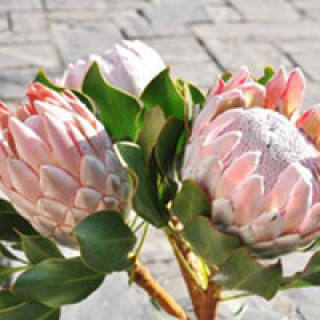
From my perspective as a young Protea, the journey to a first bloom is a long and patient one, dictated by the need to establish a strong foundation. After germination, which itself can be sporadic and take several weeks to months, my primary focus is on root development. I am not a hasty annual plant; I am a woody perennial shrub built for the long term in often nutrient-poor, well-drained soils. My root system, particularly the fine proteoid roots that are excellent at nutrient uptake, must be extensive and robust to support the significant energy demands of flowering later in life. This initial vegetative growth phase, where I concentrate solely on producing leaves and stems, typically lasts between two to three years. During this time, I am building the structural strength and energy reserves necessary to sustain a bloom.
Once I have reached a sufficient size and stored enough energy, I am physiologically mature enough to consider flowering. However, my internal clock is set by the environment. I am exquisitely tuned to the seasonal rhythms of my native habitat, which is often a Mediterranean-type climate with hot, dry summers and cool, wet winters. The key environmental cue for me to initiate flower buds is the lengthening daylight hours following the summer solstice. The increase in light exposure signals to my meristematic tissues (my growing tips) that the conditions are right to switch from producing leaves to producing the specialized structures that will become a bloom. This photoperiodic response is crucial; without the correct light signal, I may remain in a vegetative state even if I am old enough.
After receiving the environmental signal, the real work begins internally. The process of developing a Protea bloom, or inflorescence, is a slow and meticulous one. It is a complex structure composed of many small flowers surrounded by colorful, often petal-like, bracts. From the initial initiation of the flower bud within the growing tip to the moment the spectacular bloom opens fully for pollinators, another six to nine months will pass. This means the bud you see forming in late summer will not open until the following late winter or spring. This long development period is necessary to form the robust, intricate, and large flower head that is characteristic of my genus. It is an enormous investment of my resources.
Once I have successfully bloomed for the first time, I will typically continue to do so on an annual cycle, provided my environmental conditions remain favorable. Each year, the cycle repeats: I gather energy through photosynthesis during the growing season, receive the photoperiod trigger in summer, and develop my buds through the autumn and winter for a spectacular display in spring. The entire process, from a mature plant's bud initiation to full bloom, remains that same six to nine-month period. Therefore, while a gardener must wait years for the first flower, subsequent blooms are an annual event, each a testament to the patient and slow-growing nature that defines us Proteas.