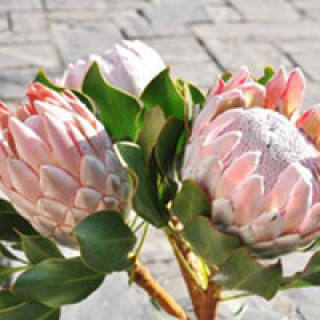
From our perspective as Proteas, the most critical aspect of our survival is what happens below the soil line. Our roots are not like those of thirsty, heavy-feeding plants. We hail from ancient, nutrient-poor, and sharply draining landscapes. Our root systems are fine and highly specialized, evolved to efficiently seek out minimal moisture and nutrients. When confined in heavy, water-retentive soil, our roots suffocate. They literally drown, unable to access the oxygen they desperately need. This leads to root rot, a swift and fatal condition. Therefore, your primary goal in creating a home for us is to replicate the fast-draining, aerated environment of our native habitat.
We do not require rich, loamy soil. In fact, such a medium would be our demise. The perfect soil mix for us feels coarse and gritty to the touch. It should be a loose assemblage of particles that, when you squeeze a handful, falls apart immediately instead of forming a compact ball. This structure is non-negotiable. It ensures that water passes through the mix rapidly, hydrating our roots without lingering. Simultaneously, it allows air to circulate freely through the pore spaces, providing the constant oxygen supply our root systems crave. This mimics the rocky, sandy slopes we naturally call home.
To achieve this structure, you must combine specific ingredients. A superior DIY mix for us would consist of three main parts. First, a coarse, washed river sand or horticultural grit. This is the primary agent for drainage, creating large pores for water to escape. Second, a slightly acidic component like peat moss, coco coir, or composted pine bark. This helps to lower the pH of the mix to the acidic conditions we prefer (a pH between 5.0 and 6.0 is ideal) and provides a small amount of moisture retention without becoming waterlogged. Finally, a generous amount of aeration material is crucial. Perlite or pumice are excellent choices as they are inorganic, sterile, and create vital air pockets within the soil matrix.
A proven recipe we thrive in is a simple blend of two parts coarse sand, two parts acidic organic matter (like peat or pine bark), and one part perlite or pumice. Thoroughly mix these components while they are dry to ensure even distribution. When planting us, please be gentle. Carefully remove us from the nursery pot, teasing out any tightly circling roots to encourage them to grow outward into their new environment. Place us in a hole that is wide but no deeper than the root ball itself, as planting too deep can cause stem rot. Backfill with your prepared mix, firming it gently around the roots to eliminate large air pockets, and water us in well to settle the soil.