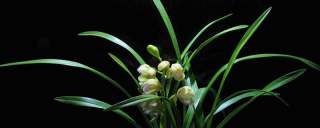
As a Dendrobium orchid, my light needs are specific and crucial for my survival and blooming. I originate from diverse environments across Asia and the Pacific, often growing as an epiphyte on trees. This means I am adapted to receive bright, dappled sunlight, filtered through the canopy above. My leaves are designed to photosynthesize efficiently under these conditions. The ideal light intensity for most of my species is bright but indirect. A key indicator of perfect light levels is the color of my foliage; it should be a bright, vibrant green. If my leaves turn a dark green, I am likely not receiving enough light to fuel flower production. Conversely, if they become yellowish or develop brown, crispy spots, I am being scorched by too much direct sun.
A north-facing window presents a unique lighting environment. In the northern hemisphere, this exposure receives no direct sunlight throughout the day. The light it provides is consistent, cool, and diffused. For many high-light plants, this would be insufficient. For me, a Dendrobium, it is generally considered the lowest acceptable limit for light intensity. The strength of this light diminishes significantly the further you move me from the windowpane. While it prevents the risk of leaf scorch, the consistent lack of intense light can make it challenging for me to gather enough energy to produce strong pseudobulbs and, most importantly, to initiate my spectacular bloom spikes.
To thrive in a north-facing window, I require your help to maximize every bit of available light. My placement is paramount. I must be placed directly on the windowsill or as close to the glass as possible without my leaves touching the cold surface in winter. Any distance from the window drastically reduces the light intensity I receive. You can assist me further by ensuring the window glass is perfectly clean, as dirt and grime can filter out a surprising amount of precious light. Reflective surfaces can be my ally; placing a white curtain behind me or a mirror on an adjacent wall can help bounce available light back onto my foliage, effectively increasing my photosynthetic capacity without the need for artificial means.
During the long, dark days of winter, the light from a north-facing window may become entirely inadequate for my needs. This is when I would greatly benefit from supplemental lighting. A simple full-spectrum LED grow light positioned a few feet above me for 12-14 hours a day can provide the necessary photons to keep me healthy and encourage flowering. Furthermore, you should consider my growth cycle. After my blooming period, I enter an active growth phase where my light needs are high to develop new canes. As the days shorten, I require a period of cooler temperatures and reduced water, but my light needs, while shifting, remain important for maturing that season's growth to set bloom buds.