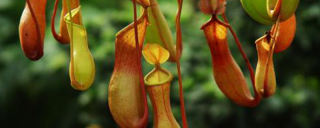
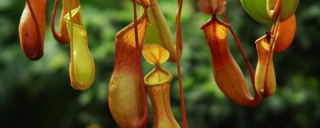
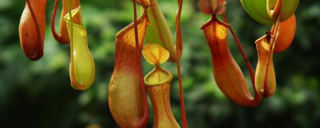
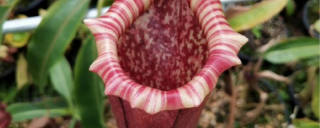
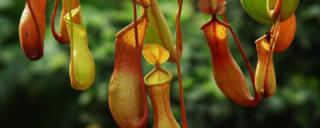
From our perspective as pitcher plants, the goal is to attract small, flying insects to our traps. We do not differentiate between a "gnat" or a "fruit fly" from a human's taxonomic perspective; we simply seek a nutrient source. To do this, we employ sophisticated tactics. Many of us produce sweet-smelling nectar around our pitcher's rim (the peristome). This nectar is not just a food source for insects; it is a carefully crafted chemical signal. It emits volatile organic compounds that mimic the scent of ripe fruit or fermentation, a smell that is particularly irresistible to small flies like your common household fruit flies (Drosophila) and fungus gnats. Furthermore, our pitchers often exhibit visual cues, such as ultraviolet patterns or contrasting colors, that guide these flying insects toward what they perceive as a food reward but is, in fact, our trap.
Once an insect is lured by the scent and lands on the slippery rim of our pitcher, the trapping process begins. The peristome is a marvel of botanical engineering—its surface is often wet and extremely slick. When a small gnat or fruit fly loses its footing, it falls into the pitcher tube. Inside, we hold a reservoir of digestive enzymes and rainwater. Downward-pointing hairs on the interior walls prevent the insect from climbing out. The prey eventually drowns and is broken down by our enzymes. This process allows us, as plants growing in nutrient-poor soils like bogs, to absorb essential nitrogen, phosphorus, and other minerals that are otherwise scarce in our environment. The bodies of gnats and fruit flies are perfect packets of these valuable nutrients.
Therefore, to answer your question directly: yes, a pitcher plant inside your home can attract and capture gnats and fruit flies. Our luring strategy is innate and operational regardless of location. If there is an existing population of these insects in your home, our scent will act as a powerful attractant, drawing them in from the surrounding area. We essentially become a natural, passive pest control device. However, it is crucial to understand the dynamics: we are not the source of the infestation. We are a response to it. Our presence may reduce the number of flies you see, but we are attracting insects that are already present and breeding from another source, such as overwatered houseplants (for fungus gnats) or overripe fruit (for fruit flies). We are a symptom monitor, not the cause of the illness.
For a harmonious existence, you must provide for our basic needs. We require bright, indirect light and, most importantly, pure water. Tap water, with its dissolved minerals and salts, is toxic to us and will quickly lead to our demise. We thrive on rainwater, distilled water, or reverse osmosis water. If the insect population in your home is very low, you may need to supplement our diet with the occasional small, dead insect, like a dried bloodworm, dropped into our pitchers. In a home setting, we will primarily capture the smallest and weakest fliers, making us particularly effective against the very gnats and fruit flies that are often a nuisance.