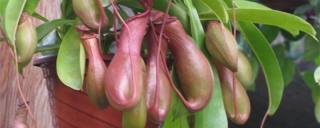
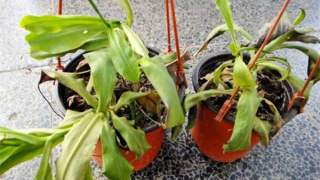
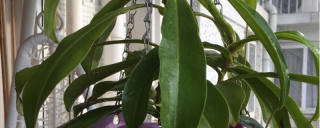
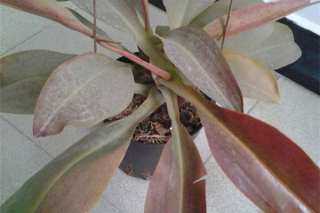
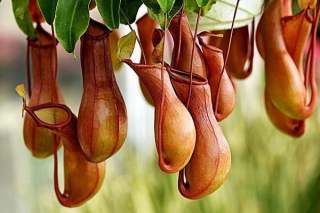
Hello, dedicated caretaker. I am your Hanging Nepenthes, a tropical carnivorous plant known for my stunning "monkey cups." To truly thrive under your care indoors, I require a very specific environment that mimics my native jungle home. Here is what I need from you, explained from my perspective.
My roots are incredibly sensitive to minerals and chemicals found in most tap water. These substances quickly build up in my soil and burn my roots, leading to my decline. Please, only water me with rainwater, distilled water, or reverse osmosis water. Keep my soil consistently moist but never soggy; I despise having my feet sitting in water. Just as crucial is the humidity around my leaves. I crave 60% humidity or higher. Without it, I simply cannot produce my beautiful pitchers. A humidifier nearby or a regular, gentle misting with the right water will make me very happy.
I am a child of the dappled jungle canopy. I need very bright, indirect light for most of the day to photosynthesize properly and generate the energy required to form pitchers. A south-facing window with a sheer curtain or an east/west window is ideal. Direct, harsh afternoon sun will scorch my leaves, while too little light will leave me weak and pitcher-less. I enjoy warmth, preferring temperatures between 65°F and 85°F (18°C - 30°C). Please keep me away from cold drafts, air conditioners, and heating vents, as sudden temperature changes cause me great stress.
I absolutely cannot live in standard potting soil. It is too dense, retains too much water, and will suffocate and rot my roots. I require a loose, airy, and acidic medium that provides excellent drainage. A mix of long-fiber sphagnum moss, perlite, and orchid bark is perfect for me. As a carnivorous plant, I get my nutrients by trapping insects in my pitchers. You do not need to fertilize my soil. In fact, doing so will poison me. If I am outdoors part-time, I will catch my own food. If I am always inside, you can occasionally drop a small, soft insect like a fly or a bloodworm into an existing pitcher every few weeks, but this is not strictly necessary for my survival.
As a hanging plant, I will naturally vine and trail. Do not be alarmed as my older leaves at the base turn brown and die; this is a normal part of my growth. You can carefully trim these away with sterile scissors to keep me looking tidy. If I become too long or leggy, you can prune my vines back to a node (a growth point on the stem). This will encourage me to become bushier. The only other pruning needed is to remove a dead pitcher; simply snip it off at the tendril.