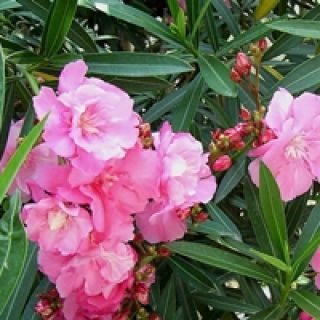
Oleander (Nerium oleander) is a robust, evergreen shrub prized in US landscapes, particularly in warmer zones (8-11), for its drought tolerance, dense foliage, and prolific, colorful blooms. However, its notorious toxicity—all parts of the plant are poisonous to humans, pets, and livestock—and its specific cultural needs must be the primary considerations when selecting companion plants. The ideal companions are those that share its preference for well-drained soil and full sun while being resilient enough to coexist with its poisonous nature.
Oleander thrives in conditions that mimic its native Mediterranean habitat. Pairing it with other plants that enjoy full sun and excellent drainage creates a cohesive, low-water landscape. Excellent choices include Rosemary (Rosmarinus officinalis), with its aromatic, upright habit and blue flowers; Lavender (Lavandula spp.), which offers contrasting silvery foliage and purple spikes; and Society Garlic (Tulbaghia violacea), which provides grassy foliage and persistent lavender blooms. These plants not only share Oleander's cultural requirements, reducing maintenance, but their textures and forms create a pleasing aesthetic contrast against the Oleander's larger, denser structure.
To highlight the Oleander's form and vibrant flowers, incorporate plants with differing foliage. Ornamental grasses are superb for this purpose. The feathery plumes of Mexican Feather Grass (Nassella tenuissima) or the bold, architectural clumps of Blue Fescue (Festuca glauca) soften the Oleander's rigidity and add movement to the garden. Similarly, the striking, sword-like leaves of Yucca or the sculptural forms of Agave provide a dramatic textural contrast. These plants are equally tough and drought-resistant, ensuring they won't struggle in the same environment as the dominant Oleander.
While caution is advised due to Oleander's toxicity, certain bulbous plants can be used to provide seasonal interest beneath and around established shrubs. The key is to select bulbs that are also toxic or unappealing to wildlife, ensuring they are not disturbed. Crinum lilies (Crinum spp.), with their large, showy flowers on tall stalks, are a bold and compatible choice. Similarly, Narcissus (daffodils) are toxic to most animals and provide a cheerful spring bloom before the Oleander hits its full stride in the summer. These plants can inject seasonal color without competing excessively for resources.
It is critical to avoid companion plants that have conflicting needs. Oleander is highly drought-tolerant and susceptible to root rot in poorly drained soils. Therefore, avoid water-loving plants like Azaleas, Hydrangeas, or impatiens, as their need for consistent moisture will create an unhealthy environment for the Oleander's roots. Furthermore, given its toxicity, it is prudent to avoid planting Oleander near edible gardens, fruit trees, or in areas frequented by curious children or pets. The sap can also be a skin irritant, so plants that require frequent pruning or handling near it should be chosen with care.