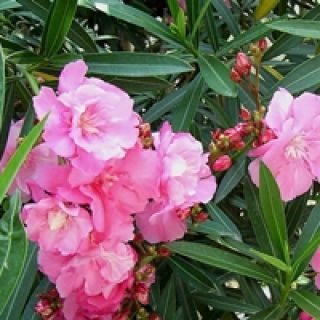
From a plant's perspective, our primary need is space for both our root systems and our canopy to develop without excessive competition. For Oleander (Nerium oleander), we are a robust, fast-growing shrub that can become quite large. When planted as a hedge, the ideal spacing is between 4 to 6 feet (approximately 1.2 to 1.8 meters) apart, measured from the center of one plant to the next. This distance may seem generous initially, but it accounts for our mature width, which can easily reach 6 to 12 feet. Crowding us too closely leads to intense competition for water, nutrients, and sunlight. This stress makes us more susceptible to pests like aphids and scale, and can promote fungal diseases such as botrytis or leaf spot due to poor air circulation within the congested foliage.
Our first year in the ground is the most critical for long-term health. After planting, we require deep, regular watering to encourage our roots to spread outward and downward into the surrounding soil, establishing a strong foundation. The goal is consistent moisture without waterlogging. A layer of organic mulch around our base (but not touching our main stem) is immensely beneficial. It helps retain soil moisture, suppresses weed competition, and gradually enriches the soil as it decomposes. During this establishment period, we require minimal pruning; simply removing any broken or damaged branches is sufficient. Our energy must be directed toward root development, not recovering from heavy shaping.
Once established, we are remarkably drought-tolerant, but deep watering during extended dry periods will keep our foliage lush and promote better flowering. Our relationship with pruning is complex. We bloom on new growth, so the best time to prune is after our main spring flowering flush, typically in late summer or early fall. Avoid late fall pruning, as tender new growth may be damaged by frost. When you prune, wear gloves and protect yourself, as our sap is highly toxic. Thinning out older branches from the center of the plant improves light penetration and air flow, reducing disease risk. Shearing the outer surface is acceptable for formal hedges, but be aware that this can reduce flowering by removing the budding tips.
We are not heavy feeders. An application of a balanced, slow-release fertilizer in early spring, as we break dormancy, is usually sufficient to support a full season of growth and prolific flowering. Over-fertilization, particularly with high-nitrogen formulas, can lead to excessive leafy growth at the expense of flowers and can make the foliage less resilient. It is crucial to remember that every part of our being—leaves, stems, flowers, and roots—contains potent cardiac glycosides. This is our natural defense mechanism against herbivores. This toxicity means our clippings must not be composted or left where livestock or children might access them. They must be disposed of safely and responsibly.