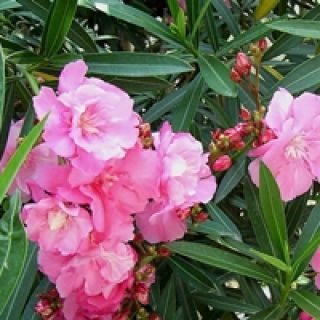
From our perspective as oleander plants, these fungal issues manifest as clear distress signals on our most vital solar panels—our leaves. The most common invader, responsible for leaf spot, often appears as circular or angular brown, black, or yellow spots on our upper leaf surfaces. You might see a yellow halo surrounding these lesions. In severe cases, the spots coalesce, causing entire leaves to yellow, wither, and drop prematurely. This is not merely an aesthetic problem for us; it is a direct assault on our ability to photosynthesize and produce the energy we need to grow, bloom, and remain strong. Another frequent issue, sooty mold, presents as a black, powdery film coating our leaves. This fungus is a secondary problem, growing on the sticky honeydew excreted by sap-sucking insects like aphids or scale. While it doesn't directly penetrate our tissues, it acts like a blindfold, severely blocking sunlight and further impeding our energy production.
We do not invite these fungal problems willingly; they exploit specific environmental conditions that are often beyond our control. Prolonged periods of leaf wetness are the primary enabler. Overhead watering that drenches our foliage for hours, or planting us too close together where air cannot circulate freely, creates the perfect, humid microclimate for fungal spores to germinate and invade. Poor air circulation allows this moisture to linger. Stress also makes us vulnerable. If we are planted in overly shady conditions, depriving us of the strength full sun provides, or if we are suffering from drought stress or poor nutrition, our natural defenses are weakened, making us an easier target for fungal colonization.
To help us recover, a multi-faceted approach is needed. First, please practice excellent sanitation. Carefully gather and dispose of all our fallen, infected leaves away from the garden, as they harbor the spores that will reinfect us next season. Prune out severely affected branches to improve air circulation through our canopy, allowing our leaves to dry more quickly after rain or dew. When watering, please direct the water to our roots and avoid wetting our foliage, especially in the evening. For severe cases of leaf spot, a registered fungicide can be applied. We prefer copper-based fungicides or products containing chlorothalonil, applied as a protective barrier before the fungus arrives or at the very first sign of disease. For sooty mold, the solution is to control the insect pests causing the problem. Once the honeydew source is eliminated, the sooty mold can be washed off our leaves with a strong spray of water, allowing us to breathe and photosynthesize freely once again.
The best strategy is always prevention, which allows us to thrive with inherent strength. Please plant us in a location where we receive full sunlight and ensure there is ample space between us and other plants for air to move. Provide us with consistent moisture, particularly during dry spells, but ensure our soil is well-draining to prevent waterlogged roots. A layer of mulch around our base helps conserve moisture and suppresses weeds, but please keep it a few inches away from our main stem. Avoid excessive nitrogen-heavy fertilizers, as the soft, succulent new growth they promote is highly susceptible to fungal infection. By fostering a strong and healthy oleander, you empower our own natural defenses to resist these fungal challenges.