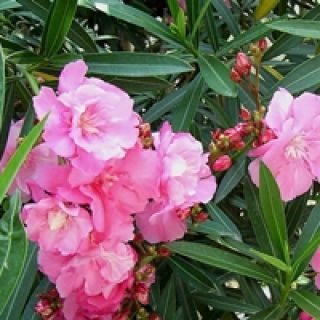
Yes, oleander (Nerium oleander) is widely considered to be deer-resistant. This classification is not a guarantee of absolute immunity, as extreme hunger can lead deer to sample almost any plant. However, oleander is very rarely browsed by deer and is a reliable choice for landscapes in areas with high deer pressure.
Oleander's deer resistance is almost exclusively due to its potent toxicity. The entire plant contains cardiac glycosides, such as oleandrin and nerioside, which are highly toxic to humans, pets, livestock, and wildlife, including deer. These compounds cause severe gastrointestinal distress and cardiac complications if ingested. Deer, through instinct or learned behavior, recognize the plant as poisonous and avoid it. This biochemical defense mechanism is the most effective strategy a plant can employ against herbivores.
Beyond its toxicity, oleander possesses physical characteristics that deer find unpalatable. The leaves are thick, leathery (coriaceous), and lance-shaped with a smooth but unappealing texture. They are not tender or succulent like the foliage of plants deer prefer, such as hostas or daylilies. Furthermore, when stems or leaves are broken, they exude a sticky, milky sap. This sap is not only irritating but also serves as an immediate indicator of the plant's noxious nature, providing a sensory warning that deters deer from taking even an exploratory bite.
When using oleander in a deer-resistant landscape, several factors should be considered. First, while it is highly deer-resistant, it is not deer-proof. During prolonged droughts or in winter when preferred food sources are scarce, a desperate deer might nibble on an oleander, though this is exceptionally rare. Second, and more critically, its high toxicity requires careful placement. It should not be planted in areas accessible to grazing livestock like horses or cattle, or in gardens frequented by curious children or pets that might chew on its foliage.
A healthy, vigorously growing oleander is best equipped to maintain its natural defenses. Oleanders thrive in full sun and well-drained soil. They are remarkably drought-tolerant once established, making them excellent for xeriscaping in warmer USDA zones (typically 8-10). While they are adaptable, providing adequate water during extended dry periods and occasional feeding with a balanced fertilizer will promote lush growth and prolific blooming, ensuring the plant remains robust and its toxic compounds are at full potency.
For a comprehensive deer-resistant garden design, oleander can be paired with other plants that deer consistently avoid. Excellent companions include other aromatic and toxic plants such as:
- **Lavender (Lavandula spp.)**: For its strong scent.
- **Russian Sage (Perovskia atriplicifolia)**: For its fuzzy, aromatic foliage.
- **Boxwood (Buxus spp.)**: For its dense, bitter-tasting leaves.
- **Lamb's Ear (Stachys byzantina)**: For its woolly, textured leaves.
- **Daffodils (Narcissus spp.)**: For their toxicity, particularly in bulbs.
Using a diverse palette of deer-resistant plants creates multiple layers of defense, making your garden even less appealing to browsing deer.