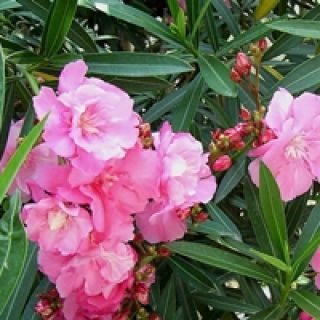
To understand an oleander's (Nerium oleander) watering needs, one must first consider its origin. This plant is native to the Mediterranean basin and parts of Asia, regions characterized by hot, dry summers and well-draining, often rocky or sandy, soils. Consequently, the oleander is a xerophytic plant, meaning it is physiologically adapted to withstand periods of drought. Its long, leathery leaves have a thick cuticle (a waxy coating) to reduce water loss through transpiration. Furthermore, its deep and extensive root system is designed to seek out moisture far below the soil surface. This inherent drought tolerance is the most critical factor in determining its summer watering schedule; overwatering is a far greater threat than underwatering.
The golden rule for watering established oleanders in the summer is deep, infrequent irrigation. This method encourages the roots to grow downward, creating a more resilient and self-sufficient plant. "Deep" watering means applying enough water to moisten the soil to a depth of at least 12 to 18 inches. "Infrequent" means allowing the top few inches of soil to dry out completely before watering again. For an oleander planted in the ground, this typically translates to a thorough soaking approximately once every seven to ten days during the peak of summer, depending on local conditions. A common mistake is light, daily watering, which promotes shallow root systems and makes the plant more vulnerable to heat stress and drought.
While a weekly schedule is a good starting point, several environmental factors will dictate the exact frequency. You must observe your plant and its surroundings rather than adhering to a rigid calendar.
Soil Type: Sandy soils drain very quickly and hold little moisture, potentially requiring watering every 5-7 days. Heavy clay soils retain water for much longer and may only need water every 10-14 days, even in heat.
Temperature and Sun Exposure: A plant in full, all-day sun will use water faster than one in partial shade. During a intense heatwave (above 90-100°F / 32-38°C), you may need to water a bit more frequently.
Plant Size and Maturity: Newly planted oleanders require more attentive care. Their root systems are not yet established, so they will need watering 2-3 times per week for the first growing season to ensure the root ball does not dry out. A large, mature shrub has a vast root network and can access deeper soil moisture, requiring less intervention.
Rainfall: Obviously, any significant summer rainfall will delay the need for manual watering. Always check soil moisture before turning on the hose.
The plant itself will provide clear signals about its hydration status. The first sign of thirst in an oleander is often a slight wilting or drooping of the leaves during the hottest part of the day. This is a normal physiological response to conserve water and does not immediately require action. If the plant perks up again in the evening or early morning, it is effectively managing its water needs. However, if the wilted, limp appearance persists into the cooler morning hours, it is a definite sign that the plant needs a deep drink. Yellowing leaves, particularly if they are dropping, can be a sign of overwatering and poor soil drainage, which can quickly lead to fatal root rot.
To water effectively, apply water slowly at the base of the plant, targeting the root zone rather than wetting the foliage. Using a soaker hose or drip irrigation system is ideal as it delivers water directly to the soil with minimal evaporation. A thick layer of organic mulch (2-3 inches) around the base of the plant (keeping it away from the main stem) is immensely beneficial. Mulch regulates soil temperature, suppresses weeds, and most importantly, drastically reduces moisture evaporation from the soil surface, meaning you can water less often.