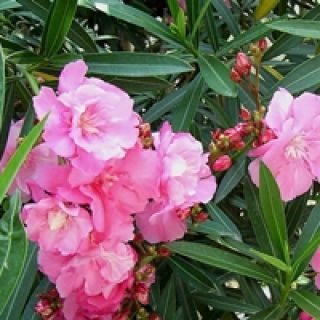
From my perspective as an oleander plant, I am a sun-worshipping being of Mediterranean origin. My primary purpose, from a biological standpoint, is to produce spectacular blooms to attract pollinators and ensure the survival of my species. When I fail to flower, it is a clear sign that my fundamental needs are not being met. Here are the most common reasons from my point of view.
I crave intense, direct sunlight for the majority of the day. It is the very fuel for my flowering process. Without at least six to eight hours of full, unfiltered sun, my internal systems cannot produce the necessary energy (through photosynthesis) to create flower buds. If I am placed in a shady or partially shaded location, my survival instinct takes over. I will direct all my energy into growing foliage and maintaining basic functions, sacrificing the luxurious but energy-intensive blooms. This is not a choice but a necessity for my survival in suboptimal conditions.
What you feed me has a profound effect. While well-intentioned, providing me with a fertilizer high in nitrogen will encourage me to focus exclusively on vigorous vegetative growth—lush, green leaves and stems—at the expense of flowers. Nitrogen promotes leafy growth, but I require a different nutrient balance to trigger and support blooming. I need a fertilizer with a higher ratio of phosphorus (the middle number in the N-P-K ratio, e.g., 5-10-5). Phosphorus is the key nutrient that supports the development of strong roots, seeds, and, most importantly for this issue, flowers.
My relationship with water is one of balance. As a drought-tolerant shrub, I am adapted to periods of dry weather. However, prolonged drought is a significant stressor. When my roots cannot find water, I enter a conservation mode, halting all non-essential processes like blooming to simply stay alive. Conversely, if my roots are constantly waterlogged in poorly draining soil, they begin to suffocate and rot. A damaged root system cannot effectively uptake water or nutrients, leaving me weakened and unable to support the energy demands of flowering.
This is a critical point humans often misunderstand. I set my flower buds on the new growth that emerges in the spring and summer. If you prune me aggressively in the late fall or early spring, you are very likely cutting off the branches that contain all the nascent flower buds for the upcoming season. You are literally removing my potential for blooms before it even has a chance to develop. The best time to shape me is right after my main spring bloom cycle has finished. This gives me ample time to produce new growth that will harden off and set buds for the following year.
If I am a young plant, please be patient. I must first establish a strong root system and vegetative framework before I can divert resources to reproduction (flowering). This may take a few years. Furthermore, if I am battling other stressors—such as a pest infestation (like aphids or scale) or a disease—my energy will be diverted to fighting these threats. Blooming is a luxury of a healthy, stress-free plant. Ensure I am free from such ailments to allow my energy to be directed toward my beautiful, fragrant flowers.