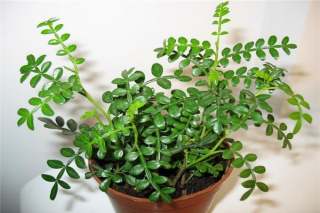
Pistacia weinmannifolia develops a root system that is fundamentally a taproot system, especially in its early years of establishment. The primary taproot grows vertically downward, seeking deep water sources and providing strong anchorage against wind and erosion on the rocky slopes it often inhabits. As the plant matures, this system becomes more complex and can evolve into a heart-root system, combining a strong, deep central root with widespread lateral roots. This dual strategy allows the plant to efficiently exploit resources from both deep soil layers and a broad surface area.
The root morphology of Pistacia weinmannifolia is a direct reflection of its native habitat in southwestern China and neighboring regions, which is characterized by well-drained, rocky, calcareous soils, often on hillsides and in gorges. Its roots are highly efficient at penetrating rocky crevices and fissures. They are also exceptionally drought-tolerant. The roots possess a thick, robust structure with a strong endodermis, which helps minimize water loss and protects the vascular tissues from physical damage and desiccation during periods of severe water stress.
A critical, often invisible aspect of its root system is its obligate symbiotic relationship with mycorrhizal fungi. The roots of Pistacia weinmannifolia form associations with arbuscular mycorrhizal fungi. The fungal hyphae effectively act as an extension of the root system, dramatically increasing the surface area for water and nutrient absorption, particularly phosphorus, which is often locked in insoluble forms in its preferred alkaline soils. This symbiosis is not a luxury but a necessity for the plant's health and survival, significantly enhancing its drought resistance and nutrient uptake efficiency.
From a planting perspective, understanding this root biology is crucial for success. Firstly, due to the initial taproot structure, the species is best established from seed in its final location, as transplanting can severely damage the sensitive taproot and lead to high mortality. If container-grown stock must be used, it should be very young to avoid root circling. Secondly, the absolute requirement for mycorrhizal fungi means that inoculation with appropriate fungal species may be essential, especially when planting into degraded or new soils where the native fungal partners are absent. Finally, the site must have excellent drainage. While the roots are adapted to rocky, arid soils, they are highly susceptible to root rot in waterlogged or consistently moist conditions. Mimicking its natural well-drained, rocky habitat is the key to successful cultivation.