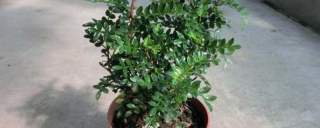
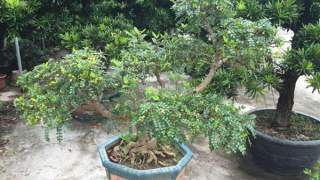
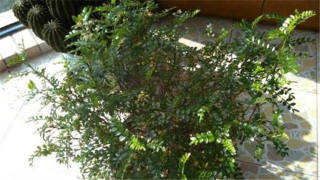
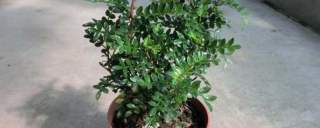
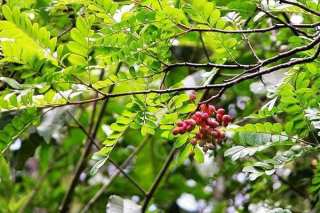
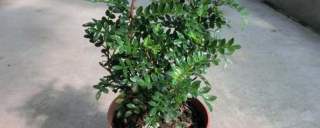
Before selecting companion plants, it is crucial to understand the native requirements of Pistacia weinmannifolia (Evergreen Pistache). This small tree or large shrub is native to rocky slopes and woodlands in parts of China and Southeast Asia. It thrives in well-drained, sandy, or loamy soil and prefers a location in full sun to partial shade. It is notably drought-tolerant once established and is hardy in USDA zones 7-9. Its dense, evergreen foliage and preference for good drainage are the primary factors to consider when choosing plant partners, as they will need to coexist in the same environment without excessive competition for water or nutrients.
The root zone of the Evergreen Pistache benefits from companions that help conserve soil moisture and suppress weeds without invasive root systems themselves. Low-growing, shallow-rooted ground covers are excellent choices. Thymus pseudolanuginosus (Woolly Thyme) is a superb option, forming a dense, water-conserving mat that tolerates dry conditions and poor soil. Sedum species (Stonecrop) are another fantastic group of succulents that thrive in well-drained, sunny spots, adding textural contrast with their fleshy leaves. For a flowering option, Delosperma cooperi (Hardy Ice Plant) provides a stunning carpet of purple flowers and excels in hot, dry locations, mirroring the pistache's low-water needs.
Selecting plants that offer contrasting forms and seasonal interest creates a visually appealing garden bed. Ornamental grasses are ideal for this purpose. The fine, arching blades of Nassella tenuissima (Mexican Feather Grass) soften the base of the pistache and sway gracefully in the breeze. For a bolder grass, the blue foliage of Festuca glauca (Elijah Blue Fescue) provides a stunning color contrast. For seasonal color, consider drought-tolerant perennials like Salvia greggii (Autumn Sage), which produces a profusion of red, pink, or white flowers from spring through fall, attracting pollinators. Perovskia atriplicifolia (Russian Sage) offers airy spikes of lavender-blue flowers and silvery-gray foliage, complementing the garden's structure and color palette while thriving in identical sunny, dry conditions.
While not essential, incorporating low-growing, non-competitive nitrogen-fixing plants can provide a subtle nutrient boost to the soil, benefiting the entire plant community. Lupinus perennis (Wild Lupine) is a native perennial that fits well in well-drained, slightly acidic soils common in many US gardens, though it may require more moisture than the pistache. For a truly low-maintenance option, consider clover species like Trifolium repens 'Purpurascens Quadrifolium' (Purple-Leaf Clover). Its attractive foliage and ability to thrive in poor soil make it a functional and decorative living mulch that fixes nitrogen, improving soil health for the primary tree.