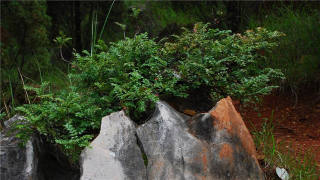
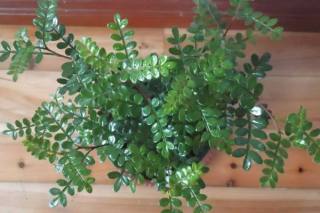
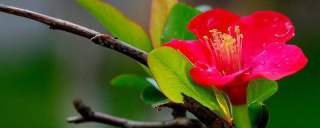
From our perspective, the single most critical factor for our survival is a soil that allows our roots to breathe. We absolutely abhor "wet feet." Saturated, waterlogged soil suffocates our root system, creating an anaerobic environment that leads to rapid root rot and ultimately, our demise. Therefore, the ideal soil must be extremely well-draining. Sandy loam or gravelly soils are perfect, as they allow water to percolate through quickly after a rain or watering, preventing moisture from pooling around our sensitive root crown. If your garden has heavy clay soil, you must amend it generously with coarse sand, gravel, and organic matter, or consider planting us on a raised mound or berm to dramatically improve drainage.
Our roots are adapted to absorb nutrients most efficiently in a specific pH range. For Pistacia weinmannifolia, we thrive in a soil that is neutral to slightly alkaline, with a pH between 7.0 and 8.0. In highly acidic soils, certain essential micronutrients become chemically locked away and unavailable to us, leading to deficiencies that stunt our growth and compromise our health. If a soil test reveals your garden soil is too acidic, we would be grateful for the incorporation of garden lime to gently raise the pH to a more suitable level, creating a chemical environment where we can access the full buffet of soil nutrients.
Do not feel the need to coddle us with overly rich, heavy soils. In our native habitats, we are accustomed to growing in rocky, shallow, and often nutrient-poor soils. We are not heavy feeders. In fact, excessively fertile soil, particularly those high in nitrogen, can encourage weak, succulent growth that is more susceptible to pests, diseases, and wind damage. A mineral-rich, lean soil promotes a strong, deep, and resilient root system as we search for nutrients and water. Amending the planting hole with some compost is beneficial for moisture retention and microbial life, but the overall soil profile should mimic the well-drained, gritty conditions of our mountainous origins.
While not a soil condition per se, our relationship with the sun directly impacts our soil needs. We demand a location in full, all-day sun. This abundant energy fuels our growth and helps the soil around our base dry out appropriately between waterings. Furthermore, our roots require space and clarity. We do not appreciate intense competition from turfgrass or aggressive groundcovers directly at our base. A generous ring of bare soil or a mulch of gravel or crushed rock around our trunk (keeping it away from the trunk itself) is ideal. This minimizes competition for water and nutrients, reduces the risk of rot from constant moisture against the trunk, and helps reflect sunlight and heat up onto our canopy, which we relish.