Cutting is divided into bud cutting, Twig Cutting, leaf bud cutting and bud cutting.
(1) bud cutting: take the foot bud cutting from the outside of the plant at the end of autumn and the beginning of winter. Take the foot buds germinated around the plant, and the bud head is full. After the buds are selected, the cuttings shall be kept 5cm-7cm, 3cm × 4cm or 4cm × 5cm according to the plant row spacing, and inserted into the seedbed or flowerpot in the greenhouse and greenhouse. The cutting depth shall not exceed 3cm, which is too deep and perishable. Keep the room temperature of 7-8 ℃ and transplant to the outside after the next spring warm.
(2) Twig Cutting is the most widely used method, which is generally carried out in April. The twigs 8cm-10cm long are cut as cuttings and carefully managed after cutting. At 18-21 ℃, most varieties can take root in about 20 days, and can be transplanted into pots in 30 days. The medium of seedbed can be garden soil plus 1 /3 of rice husk ash. On the high bed, reed mat, reed curtain or 60% shading net can be used for shading. Pay attention that the soil should not be too wet, so as not to rot roots and die seedlings.
(3) in order to save propagation materials, the leaves with axillary buds were cut from the branches for cutting. Insert the base of the petiole into the basin soil, and make the top of the axillary bud level with the basin soil surface. After inserting, it shall be placed in the shade room for maintenance to increase the surrounding humidity.
(4) if there is no foot bud at the base of the plant when cutting chrysanthemum flowers in autumn, the side branch with 6-9cm long bud can be selected to spend the winter in the pot, and then it can be transplanted to the ground after the next spring is warm. When it grows to 30-40cm high, the core can be removed to stimulate the foot bud, and then it can be cut for propagation. In this way, the variety can be preserved and the excellent characteristics of the variety can be maintained. Sex, but also make the flower more beautiful and large, and no degradation phenomenon.
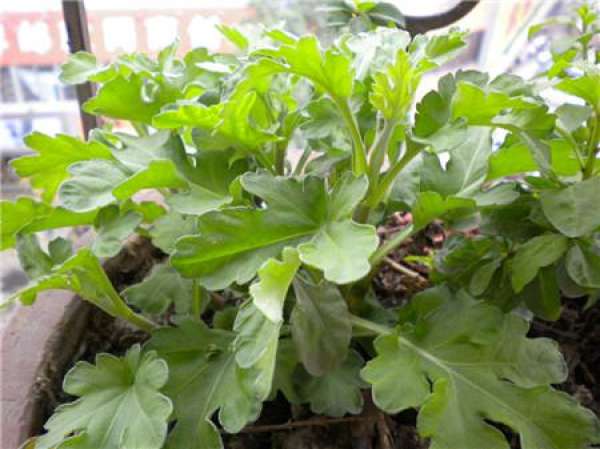
Split propagation is to dig up the mother plant of chrysanthemum, separate the branches with roots according to their natural shape, plant them separately, water them after planting, water them properly later, and then fertilize them two weeks later for normal maintenance. This method is easy to operate and reliable for survival. In the past, this method was widely used for propagation in China. The so-called "three to four beatings" means that the branches can be split in March of the lunar calendar, and the heart can be removed for maintenance in April after survival: this This method is often used in the cultivation of Dahlia and Xuanyan chrysanthemum. In order to make them bloom early and receive seeds early, the parents of hybrid breeding also use this method. However, because of the early plant division time, the lower leaves are easy to wither early, and the flower part also has deterioration phenomenon, and it is not as good as cutting method to reproduce seedlings in large quantities, so it has been less used except Dahlia cultivation.
The purpose of grafting propagation is to graft the branches of chrysanthemum on the rootstock of Artemisia plant. The purpose is to use the developed roots of Artemisia plant to absorb sufficient nutrition for the growth of chrysanthemum plant, which is strong and beautiful. At the same time, because of the strong root resistance of Artemisia, it is more suitable for management. However, taking Artemisia root as the Rootstock to receive chrysanthemum, it is generally not necessary to use it as the seed mother. If you want to have a beautiful flower and keep it as a mother plant after flowering, you must adopt the grafting and basin covering method to cut off the stem under the basin when the flower is half open. This is because the stem of the chrysanthemum in the basin is also full of root whiskers. After cutting off the stem, the chrysanthemum in the basin can still have foot buds to stay.
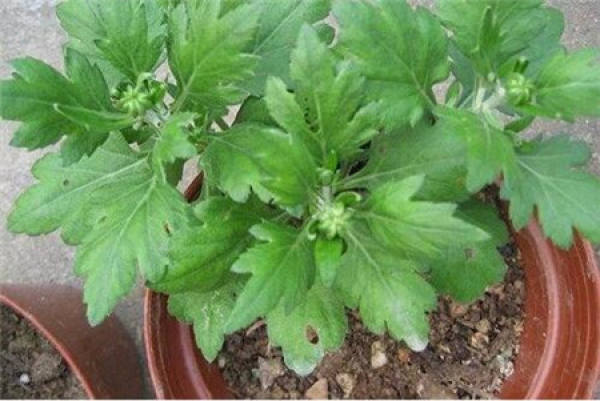
In the process of propagation, the branches of chrysanthemum are bent and buried in the soil, and the branches are exposed. The skin is cut under the nodes of the stems in the soil with a knife to stimulate rooting. After rooting, the chrysanthemum is cut and planted from the top of the soil, and a new plant is formed. This method is often used to maintain the characteristics of its budding part.
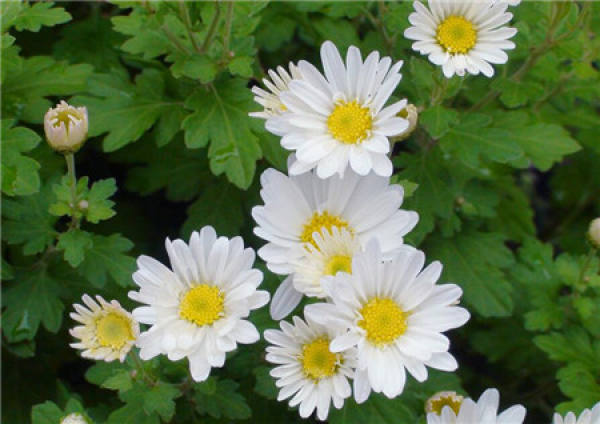
Tissue culture of flowers is a new technology rising in the 1960s. It was first successful in large-scale propagation of orchids. Tissue culture is a new technique for rapid propagation of Chrysanthemum in vitro. In recent ten years, chrysanthemum has been successfully replanted from leaves, stem tips, stem segments, petals and buds in China.