Common clove pruning methods are as follows:
The thinning degree is strong, which is mainly to maintain the tree shape and growth momentum of Syringa, and is conducive to the growth and flowering in the second year. Thinning should be carried out after defoliation every year, mainly to cut off the disease and insect branches, dead branches, delicate branches, bore branches, overlapping branches, and extra long branches that affect the growth and beauty; the small side branches at the lower part of the main branch need to be completely cut off; the old big branches also need to be cut off, so as to maintain a uniform gap between the left main branches, dense and moderate.

Short cutting is light cutting, mainly pruning the plants that do not need to stay, thinning the dense branches in the bore, increasing the ventilation and light transmittance, accelerating the germination of new branches and the formation of flower buds. The inflorescence of lilac grows on the top of the branch, and the flower bud is differentiated from the terminal bud. Therefore, after entering the flowering period (except for cutting flowers), it should not be cut short, but should be pruned after the flower has withered. At the end of spring and the beginning of summer, when the inflorescence begins to wither, if there is no seed left, the remaining flowers and two buds at the lower part of the flower spike can be cut off to reduce the nutrient consumption. If you don't cut off the plants that have flowers, the number of flowers in the next year will be greatly reduced, or even can't bloom.

The ornamental effect of lilac is very good. It is an important cut flower for indoor bottle culture. When cutting the flower branch, it must be cut close to the side branch below, and it is not allowed to use hand to climb and fold, and it is necessary to leave less stumps. A large group of mature cloves can provide a large number of cut flowers every spring, but when cutting cut flowers on the first blooming young cloves, the number should not be too much, otherwise it will affect the growth of young trees.

In the daily pruning, the root tillers which are not used for branching should be cut off in time, especially the grafted seedlings which are cultivated with the white cured tree, privet and clove as rootstocks, because a large number of root tillers occur from the rootstocks every year. If not cut off in time, clove bushes are often replaced by rootstocks.
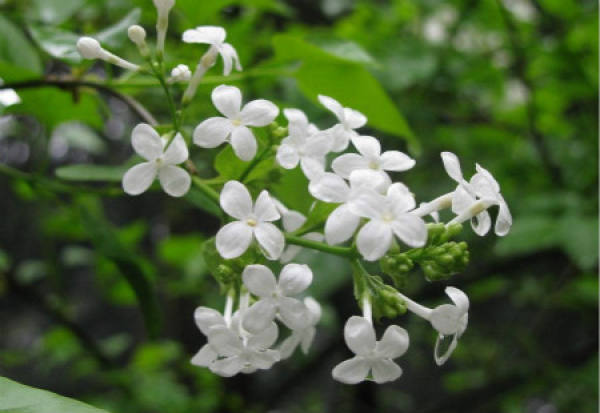
Clove vitality is very strong, you can use the method of one or two renewal to rejuvenation of old seedlings.
A renewal is to cut off all the branches on the ground of the clove tree, so that it can grow new branches, and soon form a new plant. One update may affect the appearance, and the method of two updates can be adopted, one by one in two years. In the first year, cut off 1 /2 of the old branches, keep the other half to maintain the original tree shape, and in the second year, cut off the remaining other half of the old branches. This not only does not affect the ornamental, but also provides assimilative nutrients for the growth of new branches.