The water and fertilizer management of Hemerocallis fulva is very simple. Due to the long flowering period, in addition to the application of sufficient base fertilizer at the end of the period, it is necessary to apply fertilizer twice or three times for money and flowering period. It can also spray 0.2% potassium dihydrogen phosphate mainly to supplement P and K fertilizer, so as to promote the flower hypertrophy and prolong the flowering period. At the same time, combined with watering to promote multi branching and early budding. Such a lack of fertilizer and water will lead to a high rate of bud falling and affect the amount of flowering.
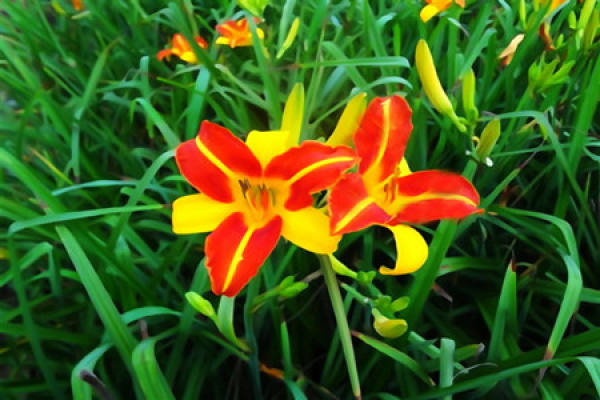
The tillering ability of Hemerocallis fulva is very strong. The row spacing must be kept at 30cm * 40cm. After planting, weeding shall be carried out in a timely manner in the seedling stage. In the seedling stage, the medium tillage should be shallow rather than deep. With the increase of young age, the medium tillage should be deep. Before the spring seedling is unearthed, it needs to loosen the soil once, and then it needs to be removed 3.4 times in time after emergence, which can achieve the dual purpose of weeding and drought prevention. The weeding should be carried out when the soil is moderate, and it can be stopped when the leaves cover the land. The weeds in the field of Hemerocallis fulva should be removed in time. If the weeds are overgrown, it is easy to cause corresponding diseases and insect pests, which will affect the growth and appearance of Hemerocallis fulva. After flowering, the flower stems should be cut off from the ground, and the withered leaves at the base of the plants should be removed in time.
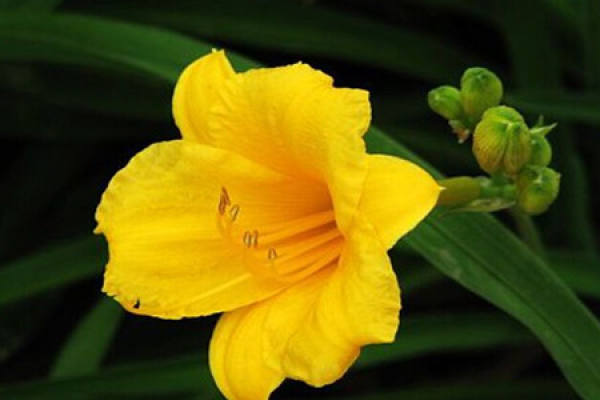
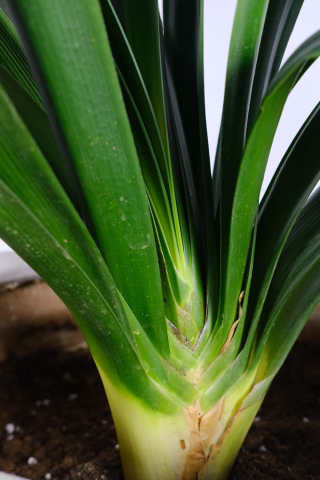
The biological characteristics of Hemerocallis fulva start from the root system, from the bottom to the top, root layer by layer every year, and move up year by year. When Hemerocallis Hemerocallis entered the flowering stage, the growth of root system was very developed. Before sprouting, the top of the loose bead clump should be planted in the soil around the clump. Thicken the soil layer to improve the soil quality. Before germination of spring buds, the top of the cluster was cultured around the plant. It should be noted that this Hemerocallis is suitable for entering the flowering stage, and it is not suitable for cultivating stumps in young plants.