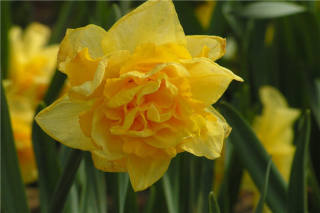
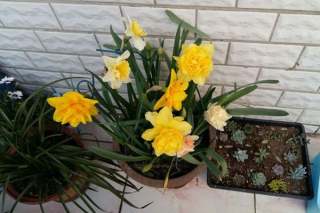
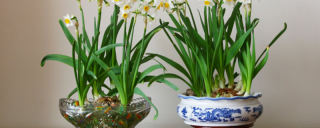
As a potted daffodil, my existence is a delicate balance, entirely dependent on the care I receive. The amount of water is perhaps the most critical factor for my health and my ability to produce the vibrant yellow blooms you admire. Getting it wrong can be devastating. From my perspective, here are the distinct signs I display when I am either drowning in excess water or parched from a lack of it.
When I receive too much water, my environment becomes hostile. My roots, which are my mouth and my anchor, need oxygen as much as they need water. Constant saturation fills all the air pockets in the soil, suffocating me. This is a slow, systemic crisis.
• Yellowing and Wilting Leaves: You might confuse this with thirst, but it's a sign of drowning. My leaves turn a pale, sickly yellow, often starting with the lower, older leaves. They become soft and limp, wilting not from dryness, but from a failure of the root system. The roots are rotting and can no longer transport water or nutrients, so my leaves suffer and collapse.
• Mushy Bulb and Root Rot: This is the most severe and often fatal symptom. If you were to gently investigate, you would find my bulb, my storehouse of energy, becoming soft, brown, and mushy instead of firm and healthy. My roots will be dark, slimy, and have a foul, decaying smell. Once this rot sets in, it is very difficult to reverse, as it destroys my very core.
• Presence of Mold or Fungus Gnats: The perpetually wet soil surface is a perfect breeding ground for white, fuzzy mold or a cloud of tiny black flies (fungus gnats). These are clear indicators that my soil is not drying out appropriately, creating a secondary problem on top of my root distress.
While I am relatively resilient and can tolerate some dryness, prolonged thirst pushes me into survival mode. Without adequate water, I cannot perform basic functions like photosynthesis or transporting nutrients, and my growth becomes stunted.
• Crisp, Brown Leaf Tips and Edges: My leaves are my solar panels, and when I am thirsty, they are the first to show it. The tips and edges will turn dry, crispy, and brown. This scorching effect starts at the extremities and moves inward as the water deficit continues. The leaves feel dry and brittle to the touch, unlike the soft wilting of overwatering.
• Drooping and Stunted Growth: My entire structure will begin to droop as the cells in my stems and leaves lose their turgor pressure—their internal water pressure. My growth will be significantly slowed or halted altogether. The flower bud, if it has formed, may fail to develop properly, appearing shriveled or "blasting" (dying before it opens).
• Dry, Pulled-Away Soil and Lightweight Pot: A very obvious sign from my world is the physical state of my soil. It will pull away from the edges of the pot, become hard, and feel bone-dry to the touch several inches down. If you lift my pot, it will feel surprisingly light, indicating a severe lack of moisture throughout the root ball.