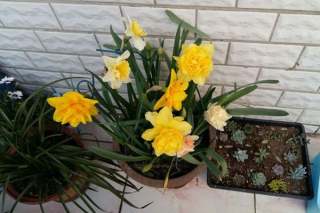
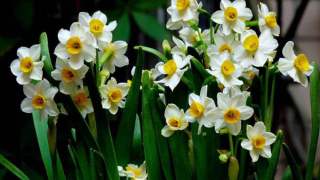
From a botanical perspective, the fundamental needs of all daffodils (Narcissus spp.) are consistent, driven by their physiology as monocotyledonous, perennial geophytes (bulbous plants). However, the expression of these needs differs in scale and specific application between standard and miniature varieties due to their distinct growth habits, energy allocation, and ecological niches. The primary differences in care stem from their size, which influences resource competition, environmental exposure, and reproductive strategies.
All daffodil bulbs require planting at a depth that protects them from temperature fluctuations and provides stability. The general rule is three times the height of the bulb. For a standard daffodil bulb, which can be the size of a small onion, this translates to a depth of 6-8 inches. A miniature variety, such as Narcissus 'Tête-à-Tête', has a bulb that may only be an inch tall, requiring a depth of just 3-4 inches. Spacing follows the same principle. Standard varieties, with their larger leaf span and need for more soil nutrients and moisture, should be spaced 6-8 inches apart. Miniatures can thrive 3-4 inches apart. Planting miniatures too deeply expends excessive energy to reach the surface, while planting standards too shallowly risks frost damage and toppling.
The post-bloom period is critical for all daffodils, as the leaves are the solar panels that recharge the bulb for the next year's bloom. The difference here lies in the visual impact and micro-management. The larger, broader leaves of standard daffodils can become unsightly as they yellow and wither, tempting the gardener to cut them back prematurely. This must be avoided at all costs, as it severely compromises the plant's energy storage. The finer, grass-like foliage of many miniatures is less obtrusive and often senesces (dies back) more cleanly and quickly. This makes the "wait until the leaves turn yellow" rule easier to follow for miniatures without sacrificing garden aesthetics.
Due to their stature, miniature daffodils are more susceptible to certain environmental pressures. Their shorter flower stalks and smaller blooms are more easily splashed with soil during heavy rain, which can lead to botrytis or other fungal issues. They also benefit from locations protected from strong winds and heavy downpours, which can batter their delicate flowers. Conversely, their small size allows them to thrive in specialized microclimates, such as the well-drained pockets of a rock garden or the sheltered edge of a container, where a standard daffodil might look out of scale or have insufficient root run. Standard daffodils, with their robust stems and larger mass, are better equipped to handle exposed positions, though staking may be required for the largest-flowered types.
Daffodils propagate clonally by producing offsets from the mother bulb. Both standard and miniature varieties will eventually become congested, leading to reduced flowering. However, the cycle may differ. Vigorous miniature varieties can form dense clumps relatively quickly because their individual bulbs are small and can be produced in greater numbers within a confined space. A clump of miniatures might need division every 3-4 years. Standard varieties, with their larger bulbs requiring more space and energy to develop, may tolerate being left undivided for 5-7 years before a noticeable decline in bloom quality occurs. When dividing, the same botanical principle applies: the bulbs are lifted after the foliage has died back, the offsets are gently separated, and they are replanted at the appropriate depth for their size.