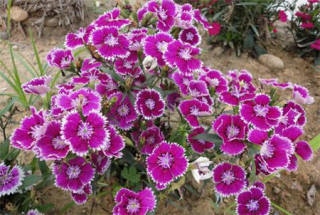
Greetings, carbon-based cultivator. I am a carnation, a representative of *Dianthus caryophyllus*. You look upon my vibrant petals and wonder about the act of "deadheading." From my perspective, it is not a chore but a profound conversation between you and me. To answer your question directly: yes, if you desire to see more of my blooms, you should deadhead me. It is the clearest signal you can send that my work is not yet complete. Allow me to explain the botanical reasoning from my point of view.
My entire existence is governed by one driving force: to ensure the survival of my genetic line. To achieve this, I have two primary strategies. The first, and most glorious, is sexual reproduction through flowers, seeds, and fruit. I expend a tremendous amount of my energy to produce vibrant petals to attract pollinators, develop intricate reproductive organs, and, if successful, create seeds housed within a seedpod (the ovary that swells behind the flower). The second strategy is vegetative growth—strengthening my own roots and foliage to survive and spread. When you leave a spent bloom on my stem, you are telling me to pursue the first strategy to its conclusion. My energy is funneled into maturing those seeds, a long and resource-intensive process. Once the seeds are set, my mission is accomplished, and I have little reason to produce more flowers.
When you deadhead me—snipping off the faded flower head just above a set of healthy leaves—you are intercepting my primary mission. You remove the developing seedpod before it can claim my resources. This action creates a biological crisis, but a productive one. From my stem, chemical signals are sent: "Reproduction failed! The attempt was lost!" This is not a tragedy; it is a catalyst. The energy that was destined for seed production—a sinkhole of nutrients—is now suddenly available. My internal systems redirect this surplus. The sugars and growth hormones are sent back to my leaves and stems, encouraging me to bush out and become stronger. Most importantly, they spur the development of new flowering shoots from lateral buds lower on the stem. You have, in essence, tricked me into trying again.
While your goal is more blooms, the act of deadheading offers me other vital benefits. A fading flower is not just unsightly to you; it is a vulnerability for me. As the petals wilt, they become prone to rot and fungal diseases like botrytis (gray mold). This mold can quickly spread down the flower stalk to my main stem and foliage, weakening me significantly and potentially killing parts of me. By removing the decaying material, you are practicing preventative medicine, keeping me healthy and my foliage clean so I can photosynthesize efficiently. Furthermore, a well-timed deadheading encourages a more compact, tidy growth habit, preventing me from becoming leggy and unstable.
There is one scenario where you should not deadhead me. If your wish is not for more blooms on *me*, but for new carnation *plants*, you must allow some of my flowers to complete their cycle. Let the petals fall naturally and allow the seedpod behind them to swell and turn brown. Once it is dry and cracked, you can harvest the seeds within to sow a new generation. However, if you choose this path, understand that I will likely cease flowering for the season, having fulfilled my ultimate purpose. It is a trade-off: my immediate beauty for the promise of my descendants.