For the indoor gardener, selecting the right type of lily is crucial for success. While many plants are colloquially called "lilies," true lilies belong to the genus Lilium, growing from bulbs. Other popular "lilies" like Peace Lilies (Spathiphyllum) are quite different botanically. This comparison will focus on true lilies suitable for indoor cultivation and their common houseplant namesakes, examining their distinct botanical needs and characteristics.
True lilies are prized for their large, often fragrant, trumpet-shaped flowers. However, they present specific challenges indoors due to their growth cycle and light requirements. They are typically forced into bloom indoors and are often treated as temporary floral displays rather than permanent houseplants.
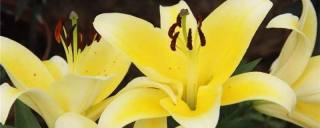
Asiatic Hybrid Lilies (Lilium asiatica): From a plant's perspective, Asiatic lilies are among the most adaptable true lilies for indoor forcing. They require a period of cold dormancy to initiate flowering. For indoor growth, pre-chilled bulbs are planted in well-draining soil. They thrive in bright, direct light for several hours daily. Their flowers are upward or outward facing, come in a wide range of vibrant colors (lacking the intense fragrance of other types), and the plants themselves are generally more compact, making them slightly better suited to container life than their taller relatives.
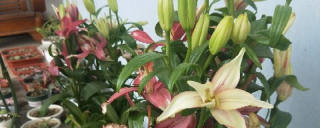
Oriental Hybrid Lilies (Lilium orientalis): Oriental lilies are famed for their intoxicating fragrance and large, dramatic blooms. Botanically, they have similar requirements to Asiatic lilies but are often more demanding. They require consistently moist (but not waterlogged) soil and are highly sensitive to fluctuations in temperature and humidity. Their light needs are equally high. While spectacular, they can grow quite tall and may require staking indoors. The plant's energy is heavily invested in the spectacular bloom, after which the bulb often needs to be rejuvenated outdoors.
From a horticultural standpoint, the Peace Lily is not a true lily at all. It is a herbaceous perennial from the Araceae family, meaning it is more closely related to Philodendrons and Monsteras. This botanical difference is the key to its superiority as a long-term indoor plant.
The Peace Lily's main adaptation for indoor life is its exceptional tolerance for low-light conditions. In its natural understory habitat, it is adapted to filtered light, which translates directly to typical indoor lighting. Its leaves are broad and dark green, efficiently capturing available photons. Furthermore, the plant is very communicative about its needs; it wilts dramatically when thirsty but recovers quickly after watering. Its "flower" is actually a specialized leaf bract (spathe) surrounding a spike of tiny flowers (spadix), and it can bloom intermittently throughout the year under good conditions, making it a persistent and rewarding indoor companion.
Agapanthus, another "imposter" lily, is a tuberous-rooted perennial. For indoor cultivation, its growth habit is a significant consideration. Agapanthus prefers to be pot-bound, which encourages blooming. From the plant's perspective, being root-bound signals a need to reproduce, leading to the production of its beautiful spherical flower clusters.
This plant requires a very bright location, such as a south-facing window, to store enough energy for flowering. It also has a distinct growth cycle, needing a dormant period in winter with cooler temperatures and reduced watering. Unlike true lilies, a well-cared-for Agapanthus can live in the same pot for many years, re-blooming each summer. Its strappy, arching leaves provide architectural interest even when the plant is not in flower.
When comparing these plants, several botanical factors determine their suitability for indoor life. Dormancy Cycle: True lilies and Agapanthus require a mandatory dormant period, which can be difficult to replicate indoors. Peace Lilies have no such requirement and grow year-round. Light Energy Requirements: True lilies and Agapanthus are high-energy plants demanding intense light to produce flowers. Peace Lilies operate efficiently on lower light energy. Root System: Peace Lilies have a flexible root system tolerant of various conditions, while true lilies and Agapanthus have specific bulb/tuber needs that are more challenging to manage in a container indoors.