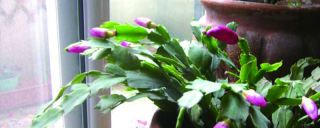
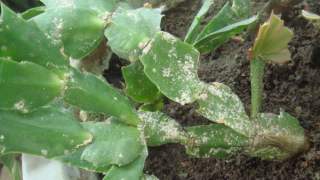
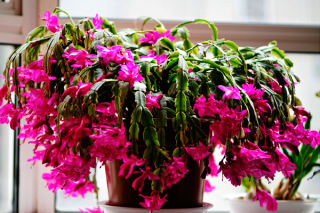
From my perspective as a Christmas cactus, the most immediate and honest signal I send when I am underwatered is a change in my very structure. My stems, which are composed of flattened, leaf-like segments called cladodes, are designed to store water. When I have ample moisture, these segments are turgid—firm and plump to the touch, holding their shape proudly. When I am deprived of water for too long, I am forced to tap into these internal reserves. You will see me begin to wilt, a general droopiness that affects my entire posture. More specifically, the individual segments will start to look shriveled, wrinkled, or puckered. They lose their plumpness and may feel soft or limp when you gently squeeze them. This is my most direct plea for a drink.
My normal, healthy color is a vibrant, deep green. This hue is a testament to my chlorophyll, which I use to convert sunlight into energy. However, when I am underwatered, the physiological stress can manifest as a change in my coloration. You may notice that my lush green begins to fade, sometimes taking on a paler, washed-out appearance. In more severe or prolonged cases of thirst, the edges of my segments might even start to turn a reddish or purplish tint. This is not a decorative feature; it is a sign of stress, often related to the accumulation of anthocyanin pigments or damage to the chlorophyll itself due to a lack of water, which is crucial for all my internal processes.
If my underwatering occurs during my critical blooming period in late autumn or winter, my response will be one of pure survival instinct. Producing and sustaining my beautiful flowers is an immense energetic cost for me. When I am struggling to simply maintain my basic cellular functions due to a lack of water, I cannot afford the luxury of reproduction. Therefore, I will make the difficult decision to abort my flower buds. You may see buds that looked promising suddenly turn limp, fall off, or simply fail to open. If I am severely stressed, I may even drop open flowers prematurely. This is a heartbreaking sign for both of us, but it is my body's way of prioritizing core survival over propagation when resources are critically low.
While I, the plant, cannot directly tell you about the soil, its condition is an extension of my well-being. An excellent way for you to confirm your suspicions about my thirst is to check the medium in which I live. If I am underwatered, the soil will be dry not just on the surface, but for a significant depth. You can perform a simple test by sticking your finger about an inch or two into the soil. If it feels completely dry and crumbly, with no cool moisture detectable, it is a strong indicator that I have used up all the available water. Furthermore, when soil becomes extremely dry, it can sometimes pull away from the edges of the pot, creating a gap. This is another clear sign that the environment around my roots is devoid of the hydration I desperately need.
It is crucial for you to distinguish my cries for water from the symptoms of overwatering, as the remedies are opposites and a misdiagnosis could be fatal. While both can cause wilting, the key difference lies in the texture of my segments and the state of the soil. As I have described, my underwatered segments are shriveled and limp, but the soil is bone-dry. In contrast, if I am overwatered, my segments may also wilt and droop, but they will often feel mushy and soft, almost rotten. The soil will be persistently wet and may have a sour smell. The base of my stems might turn black. This is a sign of root rot, where my roots are suffocating and dying, unable to absorb water at all, which ironically presents as thirst from your point of view. Please always check the soil before you water.