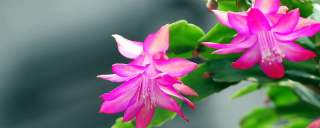
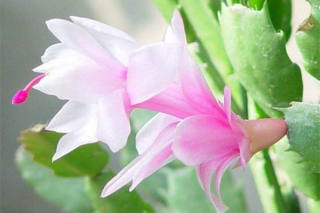
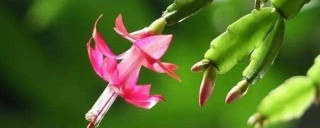
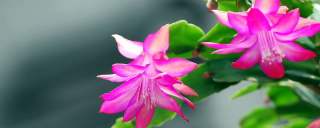
From a botanical perspective, the Christmas cactus (*Schlumbergera bridgesii*) is a perennial epiphyte, a classification that holds the key to its impressive longevity. Unlike annual plants that complete their life cycle in a single season, perennials are genetically programmed to live for many years, going through repeated cycles of growth and dormancy. As an epiphyte, it naturally grows on other plants (like trees) in its native Brazilian rainforest habitats, rather than in the soil. This lifestyle means it is not competing aggressively for resources in the same way a terrestrial plant might, and it focuses energy on sustained survival rather than rapid, exhaustive growth. In the controlled and protected environment of a home, free from predators, harsh weather, and intense competition, a Christmas cactus can live for decades, with its lifespan limited more by cultural conditions than by an inherent biological expiration date.
The plant's physiology is uniquely suited for a long life. Its segmented, succulent stems are designed for water and nutrient storage, allowing it to withstand periods of drought that would kill less resilient plants. This efficient resource management reduces stress, a major factor in plant decline. Furthermore, the Christmas cactus possesses meristematic tissue at the growing points of its segments. This tissue consists of undifferentiated cells capable of continuous division, enabling the plant to produce new stems, flowers, and roots year after year. There is no programmed senescence for the plant as a whole; individual segments may age and woody, but new segments are constantly being produced from the healthy parts of the plant, effectively allowing it to regenerate itself indefinitely.
While genetically equipped for a long life, the actual lifespan is directly determined by the care it receives. Several environmental factors are critical. First, light is paramount; bright, indirect light mimics its natural canopy habitat and is essential for photosynthesis without causing sunburn. Second, a well-draining, slightly acidic potting mix is crucial to prevent root rot, the most common cause of premature death. Overwatering suffocates the roots, while underwatering causes desiccation; both are significant stressors. Third, the plant requires a distinct temperature and light cycle to trigger blooming, and successfully navigating this cycle year after year contributes to its overall vitality. A plant that is stressed by incorrect lighting, chronic overwatering, or pest infestations (like mealybugs or scale) will have a significantly shortened lifespan as its energy is diverted from growth to survival.
From a strict biological viewpoint, the life of an individual Christmas cactus plant can be extended almost indefinitely through propagation. This process involves taking stem cuttings (a few segments long) from a healthy, mature plant and rooting them to create a new, genetically identical plant. When the original "parent" plant becomes too large, leggy, or develops a damaged base, it can be rejuvenated by propagating its healthy sections. The new plants carry the exact same genetic material as the original. It is not uncommon for families to have Christmas cacti that are decades old, having been passed down through generations via this method. In this sense, the plant achieves a form of biological continuity, where the genetic individual lives on even as the specific potted specimen may change.
There are numerous anecdotal reports from gardeners of Christmas cacti living for over 50, 80, or even 100 years in cultivation. These venerable plants often become large, sprawling specimens that are the centerpieces of their environments. While such extreme ages are impressive, they are the exception that proves the rule about the plant's potential. A more realistic expectation for a well-cared-for Christmas cactus is a lifespan of 20 to 30 years, with many thriving for much longer. The key differentiator between a plant that lives for a decade and one that lives for several is consistent, appropriate care that minimizes stress and allows the plant to express its innate, perennial nature fully.