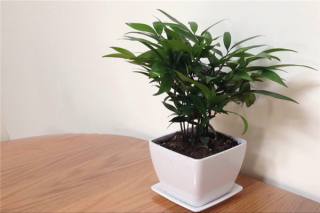
Before you begin, it is essential to understand how I, a Lucky Bamboo (Dracaena sanderiana), grow. I am not a true bamboo but a member of the Dracaena family. My growth pattern is key to successful propagation. I grow in segments called "stalks" or "canes." Along these stalks, you will find raised rings called "nodes." These nodes are incredibly important; they are my dormant growth points. The small bumps on either side of a node are the beginnings of new roots, and the area just above the node is where a new shoot, or stem, will emerge. My leaves grow only from the top of the stalk or from these new shoots. When you propagate me, you are essentially encouraging these dormant nodes to activate and create a whole new plant.
To ensure a smooth and healthy division, please gather a few items. You will need a very sharp, clean cutting tool. A sharp knife, pruning shears, or even a pair of scissors will work, but they must be sterilized. You can wipe the blades with rubbing alcohol to prevent any harmful bacteria from entering my fresh wounds. Have a clean container of water ready if you plan to root the cuttings hydroponically. If you prefer to plant directly in soil, prepare a pot with a well-draining potting mix. Finally, some people find it helpful to have a small amount of rooting hormone powder on hand, though I can often root successfully without it.
Now, let's proceed with the actual propagation. The goal is to create sections that each contain at least one healthy node.
First, carefully remove me from my current container. Gently rinse my roots under lukewarm water to remove any substrate, so you can see my structure clearly. Identify the sections you wish to separate. Look for natural divisions in my stalk cluster or decide where to make a cut.
Using your sterilized tool, make a clean, straight cut through the stalk. It is crucial to cut between the nodes, not directly through one. Each new section you create should be at least 3 to 5 inches long and must include at least one node, which is the source of new roots. If my original stalk has a leafy top, you can also propagate this top section as long as it has a node attached.
Once you have your sections, you have two primary choices for rooting them: water or soil. For water propagation, place the cuttings in a container of fresh, clean water, ensuring the node is submerged. Change the water every week to keep it oxygenated and prevent rot. You should see white roots emerging from the node within a few weeks.
For soil propagation, dip the cut end of the stalk section into rooting hormone powder if you are using it, and then plant it about an inch deep into moist, well-draining soil. Keep the soil consistently moist but not soggy. Soil propagation can be slightly slower, but it avoids the transition shock from water to soil later on. Whichever method you choose, place my new cuttings in a spot with bright, indirect light. Direct sunlight is too harsh for my tender new growth and can scorch my leaves or stress the developing roots.
After division, both the parent plant and the new cuttings need gentle care. The original plant, now with a fresh cut, can be repotted. You may notice that the cut top of the parent stalk calluses over, and in time, it might even send out one or two new side shoots from just below the cut, making it bushier. As for the cuttings, be patient. Root development takes energy and time. Once the water-propagated cuttings have a healthy set of roots about 1-2 inches long, they can be potted in soil if you wish. Continue to provide us all with the same consistent care: filtered water, indirect light, and an occasional wipe of our leaves to keep us dust-free and efficiently photosynthesizing.