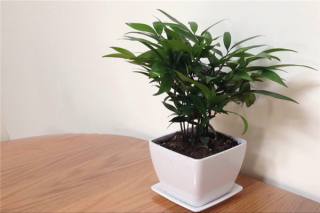
From the perspective of the bamboo plant itself, the fundamental answer to your watering frequency is not based on a rigid schedule but on maintaining consistent soil moisture. Bamboo is a plant that thrives when its roots have constant access to water, but it will suffer dramatically if those roots are left sitting in waterlogged soil. The root system requires oxygen as much as it requires water. Saturated soil fills all the air pockets, suffocating the roots and leading to root rot, which is often fatal. Therefore, the goal is to keep the growing medium evenly moist, like a well-wrung-out sponge, never allowing it to become completely dry or perpetually soggy.
Several environmental and physical factors directly impact how quickly a containerized bamboo plant uses water. Understanding these from the plant's viewpoint is crucial for adjusting your watering habits.
Season and Temperature: During the active growing season (spring and summer), the plant is metabolically active, producing new culms (canes) and leaves. This process, combined with higher temperatures, leads to rapid transpiration (water loss through leaves) and evaporation from the soil surface. Consequently, the plant will demand water much more frequently, potentially daily in hot, dry climates. In contrast, during autumn and especially winter, the plant's growth slows or becomes dormant. With cooler temperatures and less sunlight, water loss is minimal, meaning the soil will stay moist for much longer, requiring far less frequent watering.
Container Size and Material: A bamboo plant in a small container has a limited volume of soil and, therefore, a small reservoir of water. Its roots can quickly deplete this reserve. A large container holds more moisture. Furthermore, porous containers like terracotta or unglazed clay allow water to evaporate through their walls, drying the soil faster than non-porous plastic, metal, or glazed ceramic pots.
Light Exposure and Airflow: A bamboo placed in full sun will transpire water rapidly to cool itself, demanding more frequent watering than the same plant in a shaded location. Similarly, a spot with high wind exposure will strip moisture from the leaves and soil surface much faster than a sheltered location.
The most reliable way to understand your bamboo's need for water is to physically check the soil moisture at the root level. Do not rely solely on the surface appearance, which can be deceptive. Insert your finger about one to two inches into the soil. This simple test tells you exactly what the plant's roots are experiencing.
If the soil feels dry at that depth: It is time to water thoroughly. Water slowly until you see it running freely out of the drainage holes at the bottom of the pot. This ensures the entire root ball has been hydrated.
If the soil feels moist or cool: The plant has sufficient water. Do not water at this time. Check again in a day or two.
If the soil feels soggy or wet: This is a sign of overwatering and potential danger. Allow the soil to dry out significantly before the next watering and ensure the container has adequate drainage.
The bamboo plant will communicate its discomfort with your watering regimen. Learning to read these signs is essential.
Signs of Underwatering: The most immediate sign is the curling of leaves. To conserve moisture, the leaves will curl inward, lengthwise, forming a "V" shape. If the situation persists, the leaf tips and edges will begin to turn brown and crispy. The plant may also appear wilted.
Signs of Overwatering: The symptoms are often slower to appear but more serious. The leaves may turn pale green or yellow, typically starting with the older leaves. The plant might exhibit a general droopiness that resembles underwatering, but the key difference is that the soil will be wet. The most severe consequence is root rot, where the roots turn brown, black, and mushy, ultimately causing the entire plant to decline and die.