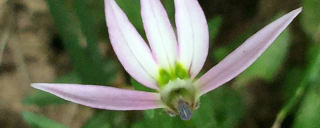
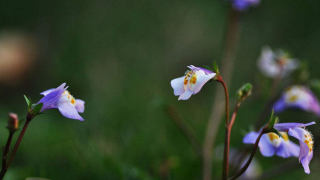
Greetings. We are the Lobelia, a diverse genus with over 400 species, from the delicate annual edgings you know as Lobelia erinus to the towering cardinal flower (Lobelia cardinalis) that graces wetland margins. While our appearances vary greatly, our fundamental needs for root comfort are surprisingly consistent. To understand the best soil for us, you must think not of a single type, but of a specific set of conditions we find most hospitable.
Above all else, our roots demand to breathe. We abhor sitting in saturated, waterlogged soil. When our root systems are starved of oxygen, they begin to rot, a condition you call "root rot," which is a swift and fatal sentence for most of us. Therefore, the ideal soil is one that allows water to percolate through freely, leaving behind moisture without waterlogging. A loamy soil is often ideal—a balanced mixture of sand, silt, and clay. The sand component is crucial as it creates air pockets and drainage channels. If you are planting us in a container, ensure there are ample drainage holes and consider adding a layer of gravel or perlite at the bottom to facilitate this process.
This may seem to contradict the first point, but it is a delicate balance we require. While we need drainage, we are also moisture-loving plants. Our fine, fibrous root systems are not deep taproots capable of seeking out water far below. We thrive in soil that can be described as "moist but well-drained." This is where the loam's silt and organic matter components become vital. They act like a sponge, holding onto just enough water molecules for our roots to access between waterings. A soil that is too sandy will drain too quickly, leaving us parched and stressed. A soil that is too clay-heavy will compact and hold too much water, suffocating us. The goal is a light, crumbly texture that holds its shape when squeezed but breaks apart easily.
We are not heavy feeders like some flowering plants, but we do appreciate a rich start. Incorporating generous amounts of organic matter, such as well-rotted compost, leaf mold, or peat-free potting mix, into the soil before planting is like preparing a nourishing bed for us. This organic matter does three wonderful things: it improves soil structure for better drainage and aeration, it increases water retention in a beneficial way, and it provides a slow-release source of essential nutrients. A soil rich in organic matter supports the microbial life that helps make nutrients available to our roots, promoting vigorous growth and prolific flowering.
Our roots are sensitive to the pH of their environment. We generally prefer a soil that is slightly acidic to neutral, with a pH range of 5.5 to 7.0 being optimal. In this range, essential nutrients like iron, manganese, and phosphorus are most readily available for uptake. If the soil is too alkaline (high pH), we may exhibit signs of nutrient deficiency, such as yellowing leaves (chlorosis), even if nutrients are present in the soil. You can test your soil's pH and amend it if necessary. Adding organic matter like compost often gently acidifies the soil over time, while materials like garden lime are used to raise pH if it is too low.