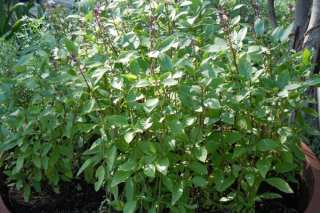
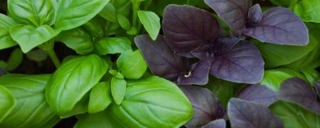
From my perspective as a basil plant, my primary instinct is to grow tall and reach for the sun. This is driven by a hormonal process called apical dominance. The main, central stem (the apical meristem) produces a hormone called auxin that suppresses the growth of the tiny buds, or auxiliary buds, located at the junctions where my leaves meet the stem (the leaf axils). My goal is to outcompete other plants for sunlight by growing vertically. However, this results in a single, tall, and often leggy stem with few leaves lower down. For you, this means less harvest. To encourage me to become the bushy plant you desire, you must strategically interrupt this natural command chain.
My first major milestone is when I have developed three to five sets of true leaves (these are the leaves that appear after the initial seed leaves, or cotyledons). At this stage, I am strong enough to handle a significant pruning. Look for the tiny buds nestled in the topmost leaf axils. You will make your cut about a quarter to a half an inch above this pair of leaves. Use sharp, clean scissors or your fingernails to make a clean cut straight across the main stem. By removing the apical meristem, you have dramatically reduced the source of the auxin hormone that was suppressing my lower buds. This is a signal to my entire system to redirect energy. Suddenly, those two tiny buds below your cut will be activated, and each will begin to grow into a new, strong stem.
After the first pruning, my growth pattern changes. Instead of one stem, I now have two. Your job is to continue this process with each new stem I produce. Whenever a stem develops another three to five sets of leaves, you should repeat the procedure. Look for a healthy pair of leaves with visible buds in their axils, and snip the stem just above them. Each time you do this, you are effectively doubling the number of growing tips. One stem becomes two, two become four, four become eight, and so on. This is how I transform from a single stalk into a dense, bushy plant. Crucially, you should always aim to harvest from the top down, never by plucking the large, older leaves from the bottom. Those bottom leaves are my solar panels; removing them weakens me and encourages a bare, woody stem.
As the days grow longer and warmer, my biological imperative shifts from leaf production to reproduction. I will start to produce flower buds at the tips of my stems. From my point of view, this is my ultimate purpose. However, from your perspective, this signals the end of prime leaf production. Once I begin flowering, my energy is channeled into creating blooms and seeds, causing the leaves to become smaller and more bitter. To keep me in a vegetative, bushy state, you must be vigilant. As soon as you see the beginnings of a flower bud, pinch it off immediately, along with the top set of leaves below it. This action, much like pruning, tells me to abort the reproductive mission and focus again on leafy growth. Consistent pinching will significantly extend my productive harvesting period.
While it may seem counterintuitive, your strategic pruning makes me a much healthier and more robust plant. By encouraging bushier growth, you are creating a sturdier base that is less likely to topple over. A denser canopy of leaves helps shade the soil, conserving moisture and suppressing weeds. Furthermore, regular removal of older growth and flower buds prevents me from becoming woody and leggy, a state where I am more susceptible to disease and pest pressure. Your careful cuts stimulate constant, vigorous new growth, which is more resilient. In return for this guidance, I provide you with a continuous and abundant supply of fragrant, flavorful leaves. It is a partnership where we both thrive.