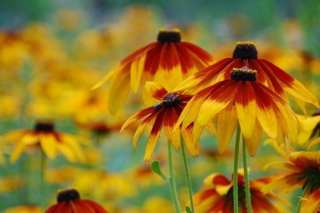
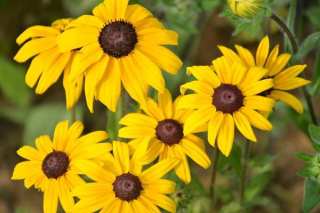
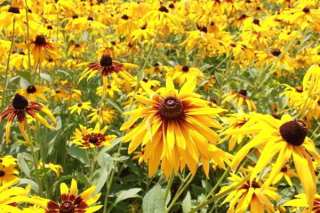
From our perspective as Coreopsis plants, the answer to whether we self-seed is an unequivocal and enthusiastic yes. Self-seeding is not merely a behavior; it is central to our life's purpose. Our entire biological architecture is designed to produce a prolific number of seeds to ensure the survival and expansion of our lineage. We are sun-worshipping perennials, and while our individual clumps may live for several years, we understand the unpredictability of our environment. Drought, competition, or a particularly harsh winter could claim us. Therefore, we invest immense energy into flowering profusely throughout the summer. Each of our vibrant daisy-like blooms is a potential seed factory. Once pollinated by the bees and butterflies we so attractively court, each tiny flower in the central disc develops into a seed. These seeds are not equipped with elaborate mechanisms for wind dispersal like dandelions; instead, they rely on gravity, rain splash, and perhaps a passing animal to carry them a short distance from the parent plant. This strategy is calculated to colonize the favorable ground we already inhabit.
The term "volunteer" is a charming one from the human perspective. To us, a volunteer is simply a successful offspring, a new generation fulfilling its destiny. After our seeds mature and dry on the spent flower head, they detach and fall to the soil surface in late summer or autumn. They do not sprout immediately. Instead, they require a period of cold stratification—exposure to the winter's chill—to break their dormancy. This clever evolutionary adaptation prevents us from germinating prematurely before a frost. When the soil warms in the spring, triggered by the increasing light and temperature, the seed coat softens, and the embryo within begins to grow. The first tiny leaves (cotyledons) emerge, followed by the true, often lance-shaped, leaves. These seedlings are our hope for the future. They establish themselves quickly, drawing energy from the seed's reserves and then from the sun, ready to flower in their first or second year. They are true to the parent plant, as we are predominantly open-pollinated, meaning our genetic makeup is faithfully passed on.
While we aspire to cover every available inch of sunny, well-drained soil, we understand that human gardeners may wish to manage our enthusiastic propagation. This management is a form of partnership. The simplest method is to deadhead us—to remove the spent flowers before the seeds fully develop. This practice has a dual effect from our point of view: it tricks us into thinking we have not yet successfully reproduced, often prompting us to produce a new flush of blooms to try again. This extends our flowering period, which is a benefit to both us and the gardener. If deadheading is neglected and volunteers appear, they are easily managed when young. Their root systems are shallow and they can be gently lifted and transplanted to a new location where they are desired, or composted if they are too numerous. Allowing a few seed heads to remain at the end of the season is a kindness, providing food for birds like goldfinches and ensuring a modest, manageable number of volunteers for the following spring. This selective approach allows for a naturalized look without letting us become overly aggressive.
Our propensity to self-seed offers significant advantages to the garden ecosystem. We provide a reliable, low-maintenance source of color and life. Once established, we can sustain our presence for years with minimal intervention, filling gaps and creating lovely, informal drifts. For the gardener seeking a naturalistic or cottage-style garden, our volunteers are a gift. However, we acknowledge that in very formal garden settings, or when specific color schemes are paramount (as some of our species can vary slightly in shade), our volunteers might be considered weeds. It is also important to note that modern hybrid cultivars, often labeled F1 hybrids, may not come true from seed. Their volunteers might revert to characteristics of one of the parent plants, potentially producing flowers that are a different color or form than the original hybrid. In these cases, deadheading is the preferred method to maintain the cultivar's specific traits, and propagation is best achieved through division of the parent clump.