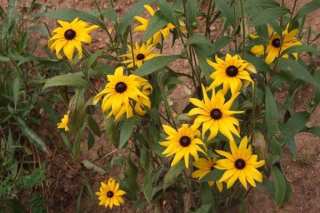
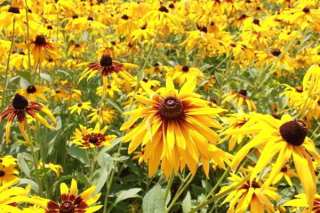
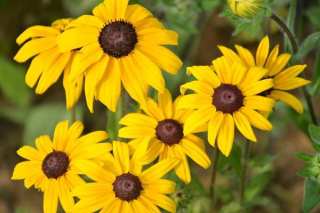
Coreopsis, often called tickseed, is a beloved perennial (and sometimes annual) prized for its cheerful, daisy-like flowers that bloom profusely from summer into fall. From the plant's perspective, the pH level of the soil is not merely a number but a fundamental key that unlocks the door to essential nutrients. It directly influences the plant's ability to build strong roots, produce vibrant foliage, and generate an abundance of flowers.
For Coreopsis, the ideal soil pH range is between 5.5 and 7.0. This span from slightly acidic to perfectly neutral is the plant's preferred dining table. Within this range, the chemical conditions in the soil are optimal for the solubility and availability of the major nutrients Coreopsis needs most: nitrogen (N) for vigorous leaf and stem growth, phosphorus (P) for strong root development and prolific flowering, and potassium (K) for overall plant health and disease resistance. When the pH is within this "sweet spot," the root hairs can efficiently absorb these nutrients, allowing the plant to thrive with minimal stress.
If a Coreopsis plant finds itself in soil with a pH significantly below 5.5, it enters a state of nutritional distress. In highly acidic conditions, aluminum and manganese can become soluble to the point of toxicity, damaging the delicate root system and impairing its function. Simultaneously, crucial nutrients like phosphorus, calcium, and molybdenum become chemically "locked up" in the soil, making them unavailable for uptake. From the plant's viewpoint, this is like being surrounded by food that it cannot eat. The result is often stunted growth, yellowing leaves (particularly between the veins), and a general lack of vigor, with significantly reduced flowering as the plant struggles to meet its basic metabolic needs.
Conversely, planting Coreopsis in alkaline soil (pH above 7.0) presents a different set of problems. In these conditions, the availability of iron, manganese, boron, and phosphorus is greatly reduced. Coreopsis is particularly sensitive to iron deficiency in alkaline soils. From the plant's perspective, this manifests as iron chlorosis, where the leaves turn yellow while the veins remain green. This inhibits the plant's ability to perform photosynthesis effectively. Without sufficient iron to produce chlorophyll, the plant cannot create the energy needed for growth and, most importantly, for producing its signature brilliant blooms. The plant will appear weak and pale, its flowering potential severely limited.
It is important to note that many species of Coreopsis, such as the popular Coreopsis verticillata (Threadleaf Coreopsis), are remarkably adaptable plants. They are often described as tolerant of a wide range of soil conditions, including poor, rocky, or dry soils. This tolerance means that a plant may survive outside the ideal pH range, especially if other conditions are favorable. However, from the plant's perspective, survival is not the same as thriving. A Coreopsis growing in its ideal pH range will be a more resilient, healthier, and floriferous specimen compared to one that is merely tolerating its environment. It will be better equipped to handle environmental stresses like drought or pest pressure.
Before planting, the most beneficial action is to test the soil pH. If a test reveals the soil is too acidic (low pH), the plant would benefit from the incorporation of a liming material like dolomitic limestone, which raises the pH and also adds calcium and magnesium. If the soil is too alkaline (high pH), amending with elemental sulfur or organic matter like peat moss or composted leaves can help to gradually lower the pH. The incorporation of generous amounts of organic matter is universally beneficial, as it helps to buffer the soil pH, improving conditions for the root system whether the soil is naturally slightly acidic or slightly alkaline. For the Coreopsis plant, this preparation creates a welcoming foundation where its roots can easily access the nourishment required for a spectacular display.