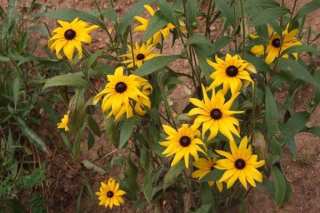
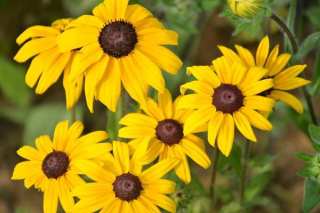
Greetings, aspiring propagator. I am Coreopsis, your sunny-faced friend, and I am eager to share the secrets of my multiplication. While I readily produce countless seeds, creating new plants from cuttings is a faster way to replicate your favorite varieties, especially the sterile hybrids that cannot set seed. This method, known as vegetative propagation, allows you to create a genetic clone, ensuring the new plant possesses the exact same flower color, growth habit, and vigor as its parent. Let me guide you through the process from my perspective.
For the highest chance of success, you must work in harmony with my internal clock. The perfect time to take cuttings is during my active growth period in late spring to early summer. At this time, my stems are maturing but still young and flexible—what you would call "softwood" or "semi-ripe" cuttings. These stems are full of the energetic cells needed to rapidly produce roots. Look for new growth that has just begun to firm up but is not yet old and woody. Avoid taking cuttings when I am flowering heavily, as my energy is directed towards bloom production. Alternatively, you can take cuttings after my main flush of flowers has passed and I begin to produce new vegetative shoots.
Your choice of cutting is crucial. Please select a healthy, non-flowering stem from this season's growth. It should be vigorous and free from any signs of pests or disease. Using a sharp, clean pair of pruners or a knife is essential; a ragged crush from dull tools invites pathogens that could rot me before I root. Make a clean cut about 3 to 5 inches long, just below a leaf node (the small bump on the stem where a leaf emerges). This node is a hub of cellular activity and is where my new roots will form. Immediately place the cuttings in a damp paper towel or a container of water to prevent them from wilting.
Now, you must prepare me for my new life underground. Gently remove the leaves from the lower one-third to one-half of the cutting. This is critical because any leaves buried in the rooting medium will rot and cause the entire cutting to fail. If the remaining leaves are very large, you can trim them in half to reduce surface area, which minimizes water loss through transpiration. This helps the cutting conserve energy while it has no roots to draw up moisture. Your goal is to leave enough leaf surface for photosynthesis but not so much that I dehydrate.
I do not need rich soil to begin my rooting journey; in fact, it would likely harm me. What I need is a sterile, well-draining, and low-fertility medium. A mix of equal parts perlite and vermiculite, or peat and perlite, is ideal. It holds just enough moisture while providing ample oxygen to my developing root cells. Before planting, you may choose to dip the base of my stem into a rooting hormone powder or gel. This is not strictly necessary, as I am relatively easy to root, but it can stimulate faster and more robust root development, increasing your success rate.
After you have inserted me about one-third to one-half of my length into the pre-moistened medium, the most critical phase begins. You must create a humid microenvironment around me. Cover my pot with a clear plastic bag or place it inside a propagation dome. This mini-greenhouse prevents me from losing moisture through my leaves. Place me in a location with bright, indirect light. Direct sun will cook me inside this humid enclosure. Keep the growing medium consistently moist but never soggy. In two to four weeks, you can test for roots by giving a very gentle tug. If you feel resistance, congratulations, I have anchored myself! Once I have a good root system, you can gradually acclimate me to less humid conditions and eventually transplant me into a larger pot or directly into the garden.