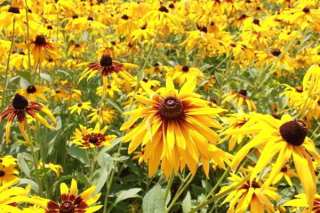
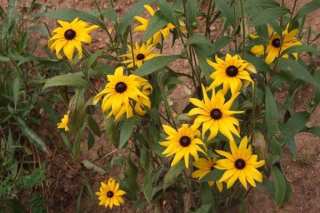
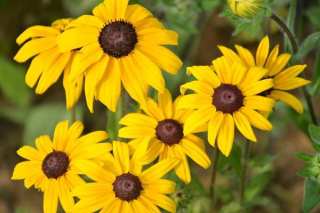
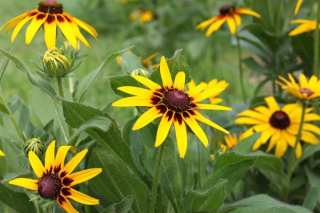
From our perspective as Coreopsis plants, our success in attracting bees and butterflies begins with the very structure of our flowers. We are members of the Asteraceae family, which means what appears to be a single flower is actually a composite head, or capitulum, made up of dozens of tiny individual florets. This design is exceptionally efficient. The showy, often yellow or pink, ray florets that form the "petals" around the edge act as brilliant landing platforms and visual beacons. The dense cluster of tiny disc florets in the center provides a concentrated food source. A pollinator can land once and access hundreds of nectar and pollen rewards without expending excessive energy, a feature highly appreciated by both bees and butterflies.
We have evolved to produce pigments that are highly visible to the key pollinators we wish to attract. Our most common colors are bright yellows, golds, and oranges, with some species offering pinks and reds. Bees, for instance, see the world differently from humans; they are particularly adept at seeing blues and yellows but cannot perceive red. Our predominant yellow hues stand out vividly against green foliage, acting as a clear signal of a profitable food source. Butterflies, which have better color vision than bees, are also drawn to these warm, bright colors. The contrast between our dark central disc and the lighter ray florets further enhances visibility, guiding pollinators directly to the source of nectar and pollen.
Nectar is the primary currency we offer in exchange for pollination services. We produce a generous supply of sugar-rich nectar to fuel the high-energy demands of bees and butterflies. The depth of our floral tubes is crucial. We are designed with relatively shallow nectar sources, making it easy for a wide range of pollinators to access the reward. Short-tongued bees, which cannot reach deep into flowers, can easily feed on our nectar. Similarly, butterflies, with their long, slender proboscises, can probe our disc florets with ease. By not being overly specialized, we welcome a diverse array of visitors, increasing our chances of cross-pollination.
Our strategy for ensuring consistent pollinator attention is to offer a reliable, long-term food source. Many Coreopsis species are prolific bloomers, producing a massive display of flowers from early summer right through to the first frost. This extended blooming period is critical for supporting pollinators throughout their entire active season. Bees, especially, need a steady supply of pollen for their larvae. By flowering continuously, we become a dependable "staple" in their foraging territory. Furthermore, our habit of deadheading ourselves—shedding spent flowers to make way for new buds—means the food supply is constantly being renewed, encouraging pollinators to return to our plants again and again.
While nectar attracts the pollinators, pollen is another essential offering, particularly for bees. Our flowers produce an abundance of protein-rich pollen, which is collected by female bees to feed their developing young. The structure of our anthers, the pollen-producing parts within each tiny disc floret, is such that pollen is readily exposed and easy to collect. As bees move across the floral head, they inadvertently become dusted with pollen, which they then carry to the next Coreopsis flower they visit, thus completing the vital act of pollination that ensures our own reproductive success and genetic diversity.