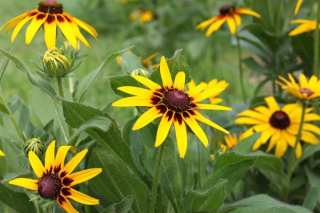
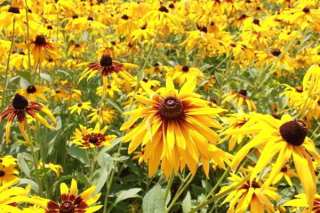
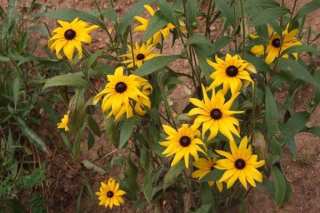
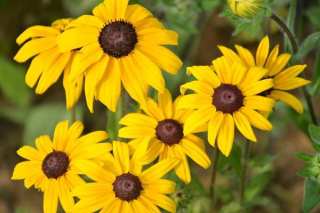
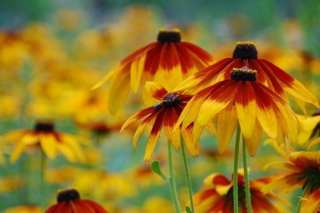
Coreopsis, often called 'tickseed,' is a beloved perennial (and some annual) prized for its cheerful, daisy-like flowers that typically bloom in vibrant shades of yellow, gold, pink, and red from early summer through fall. From a horticultural perspective, choosing companion plants involves more than just color matching; it requires considering plant structure, bloom time, foliage texture, and cultural needs like sun exposure, water, and soil type. The best companions will create a cohesive, ecologically supportive, and visually appealing garden display.
Ornamental grasses provide an excellent structural contrast to the often-mounded form and fine texture of Coreopsis. The vertical lines of grasses add movement and sound to the garden as they sway in the wind, and their feathery plumes offer winter interest after the Coreopsis has faded. Grasses like **Fountain Grass (Pennisetum alopecuroides)** or **Blue Fescue (Festuca glauca)** create a soft, billowing effect that complements the bright, solid-colored flowers of Coreopsis. More importantly, most ornamental grasses share Coreopsis's preference for full sun and well-drained soil, making them ideal cultural partners that thrive under the same conditions without competing aggressively for resources.
To break up the rounded forms and add dramatic vertical accents, spiky flowering perennials are unparalleled companions. Plants like **Salvia (Salvia nemorosa)**, **Russian Sage (Perovskia atriplicifolia)**, and **Veronica (Veronica spicata)** send up sturdy flower spikes that contrast beautifully with the airy, free-form blooms of Coreopsis. The cool purples and blues of these plants create a stunning color harmony with the warm yellows and reds of Coreopsis, a classic complementary color scheme that is visually stimulating. Furthermore, these plants are all sun-loving, drought-tolerant, and pollinator-friendly, creating a vibrant hub of activity for bees and butterflies throughout the season.
The foliage of a companion plant is just as important as its flowers, especially when considering the entire growing season. Plants with silvery or gray foliage provide a cool, calming backdrop that makes the bright flowers of Coreopsis pop. **Lamb's Ear (Stachys byzantina)** offers incredibly soft, fuzzy, silver leaves that form a low-growing mat, contrasting in both color and texture. **Artemisia (Artemisia 'Powis Castle')** provides fine, lacy, aromatic silver foliage that adds a misty, soft element to the border. These foliage plants thrive in the same hot, dry, sunny conditions and their subdued coloring allows the Coreopsis to be the star of the show.
Pairing Coreopsis with other perennials that have overlapping but slightly staggered bloom times ensures a long season of color. **Coneflower (Echinacea purpurea)**, with its bold, sturdy petals and prominent centers, is a classic partner, sharing cultural needs and attracting similar beneficial insects. **Shasta Daisy (Leucanthemum x superbum)** mirrors the daisy-form of Coreopsis but in crisp white, creating a harmonious yet distinct pairing. For later summer and fall interest, **Sedum 'Autumn Joy' (Hylotelephium 'Herbstfreude')** provides broad, succulent foliage and flower heads that start pink and mature to a rusty bronze, complementing the later-blooming varieties of Coreopsis and adding substance to the autumn garden.