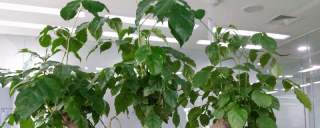
Hello from the understory! We, the houseplants you adore, may seem like simple decorative elements, but we are complex living beings, each with our own unique needs and characteristics. When you bring us into your home, you're adopting a piece of the forest. Today, I, the Emerald Tree Philodendron, will guide you through a comparison with my common look-alikes. Understanding our subtle differences is key to helping us thrive, rather than just survive, in your care.
First, let me introduce myself. I am a bold, architectural plant, known for my large, deeply lobed, and glossy green leaves that can grow impressively large. In my youth, my leaves are heart-shaped, but as I mature, they develop those characteristic splits and sinuses. I am not a true tree, but I develop a thick, tree-like trunk as I age, a feature called a caudex. I am an aroid, meaning I belong to the Araceae family, and I hail from the tropical regions of South America. I appreciate bright, indirect light and like my soil to dry out somewhat between waterings. My growth is a testament to patience, as I am a relatively slow but steady grower.
Many confuse me with my famous cousin, the Monstera deliciosa, often called the Split-Leaf Philodendron. While we share a family, we are different genera. The most noticeable difference is in our leaves. My leaves are deeply lobed, meaning the cuts go from the edge towards the center, but the leaf margin remains connected. Monstera's leaves, however, develop distinct holes and internal splits, a phenomenon called fenestration. Furthermore, Monstera is a climber (hemiepiphyte) by nature and will eagerly attach itself to a moss pole, whereas I am more self-supporting with my sturdy trunk. Our light needs are similar, but Monstera tends to be a faster and more vigorous grower.
Another relative often brought into the conversation is the Monstera adansonii, or Swiss Cheese Plant. The confusion here is usually one of scale. While Monstera deliciosa has large, perforated leaves, the adansonii has smaller, more delicate leaves that are predominantly hole rather than leaf. Its growth habit is vining and trailing, making it ideal for hanging baskets, a stark contrast to my upright, tree-like form. It requires similar care but is much more compact and can be more sensitive to overwatering due to its thinner leaves.
Sometimes, from a distance, I am mistaken for the Fiddle-Leaf Fig. This is likely due to our shared trait of having large, dramatic leaves that make a statement. However, a closer look reveals significant differences. The Fiddle-Leaf Fig's leaves are shaped like a violin or fiddle—they are large, leathery, and have a prominent veining pattern, but they are not split or lobed like mine. Their leaf texture is much more coarse. More importantly, the Fiddle-Leaf Fig is notoriously temperamental. It demands consistent light, hates being moved, and is quick to drop leaves if unhappy. I, on the other hand, am generally more adaptable and forgiving of minor changes in my environment.
From our perspective, the most critical distinctions lie in our care. While we all enjoy bright, indirect light, our tolerance for variation differs. I and my Monstera cousins are more forgiving of lower light than the Fiddle-Leaf Fig. Our watering needs are also distinct. I prefer to dry out a bit, while Monsteras enjoy consistent moisture but not soggy soil. The Fiddle-Leaf Fig requires a very precise watering schedule. Understanding these nuances—our individual thirst for light and water—is the truest form of love you can show us. It allows you to create a micro-habitat where we can truly flourish and show you our most vibrant selves.