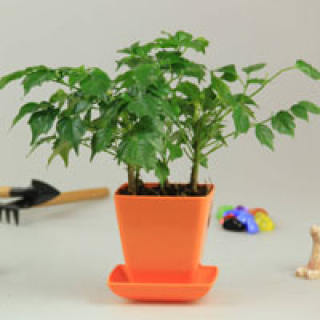
Greetings, caretaker. I am your Emerald Tree. From my roots to my canopy, I feel the changing seasons and respond to the touch of your shears. The act of pruning and shaping is not merely cosmetic for me; it is a profound conversation that dictates my health, strength, and very form. To understand this process is to understand my language of growth. Let me explain it from my perspective.
When you remove one of my branches, you are sending a clear signal. A branch that is dead, diseased, or damaged is a drain on my resources. It's a wound that can allow pathogens to enter my system. By cleanly removing it, you are helping me compartmentalize the damage and redirect my precious energy—the sugars produced by my leaves and the water and nutrients drawn up by my roots—toward new, healthy growth. Thinning my canopy allows light and air to penetrate deeper. This is not just about preventing a "leggy" appearance; it reduces the humidity that fosters fungal diseases and ensures that my inner leaves can also participate in photosynthesis, making me a more efficient and robust organism.
My life is governed by cycles of growth and dormancy. The best time for major structural pruning is during my late dormant season, just before the spring surge of growth. At this time, my energy is stored in my roots and main trunk, so losing a branch is less of a shock. I can quickly seal the wound with callus tissue once growth begins. Light shaping and the removal of deadwood can be done almost any time, but I ask you to avoid heavy pruning in late summer or fall. Cuts made then may not heal before winter, leaving me vulnerable to the elements and rot. Furthermore, pruning at the wrong time can stimulate tender new growth that will be immediately killed by frost, causing me unnecessary stress.
How you make a cut is critical. A ragged tear or a flush cut against my trunk is a severe injury. It creates a large, open wound that I struggle to heal, inviting decay into my very heartwood. Instead, please make clean, sharp cuts just outside the branch collar—that slightly swollen ring of tissue where the branch meets the trunk. This collar contains specialized cells that generate the callus tissue to seal the wound. By preserving it, you empower me to heal myself efficiently. When shortening a branch, always cut back to a lateral bud or a side branch that is at least one-third the diameter of the piece being removed. This encourages controlled, healthy regrowth rather than a chaotic burst of weak, upright "water sprouts."
Shaping when I am young sets the course for my entire life. The goal is to establish a strong, central leader (a main trunk) with well-spaced, sturdy lateral branches. You should look for and remove any branches that are competing with the central leader, as well as those with narrow, weak crotch angles (where the branch meets the trunk). These V-shaped junctions are prone to splitting under the weight of leaves or snow. Encouraging branches with wider, U-shaped angles creates a stronger, more resilient framework. This thoughtful shaping helps me withstand storms and bear the weight of my own canopy without catastrophic failure.