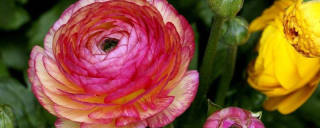
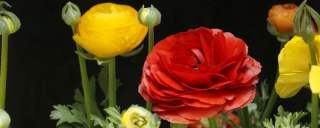
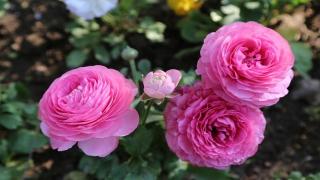
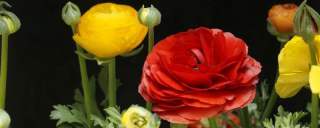
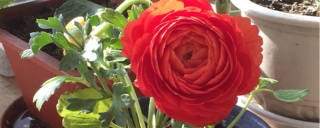
From the plant's perspective, light is not a luxury but the fundamental currency of life. Ranunculus, prized for its exquisitely layered and brightly colored blooms, is a high-energy plant. In its natural environment, it thrives under full sun, requiring a significant amount of photosynthetic active radiation (PAR) to fuel its growth and, most importantly, to develop its complex flowers. Low-light home conditions simply cannot meet this metabolic demand. Without adequate light, the plant's internal systems will prioritize survival over reproduction, resulting in weak, leggy growth as it stretches desperately for a light source, and a complete absence of the coveted blooms.
Grow lights serve as a synthetic sun, but not all light is equal to a plant's photoreceptors. Ranunculus specifically requires a full spectrum of light to complete its different growth stages. For the vegetative stage of leaf and stem development, lights with a higher concentration of blue wavelengths are crucial as they promote strong, compact, and healthy foliage. As the plant matures, it requires a shift towards light with more red and far-red wavelengths to trigger and sustain the flowering process—the photoperiodic response. Full-spectrum LED grow lights are ideal because they can provide this balanced, sun-like spectrum, convincing the ranunculus that it is in an optimal environment to produce flowers.
Providing the correct spectrum is only half the battle; the intensity and duration of light are equally critical. A weak light source placed too far away will be insufficient, leading to the same leggy growth seen in low-light conditions. The grow light must be positioned close enough to the plant (typically 6-12 inches, depending on light strength) to deliver intense, usable light without generating excessive heat that could scorch the leaves. Furthermore, ranunculus are long-day plants in terms of their flowering cycle. This means they require 12-14 hours of consistent light daily to initiate and develop flower buds. A timer is essential to provide this consistent daily "long day" photoperiod, ensuring the plant receives its required daily light integral (DLI).
When provided with an appropriate grow light, the ranunculus plant will respond with clear physiological changes. The most immediate response will be a cessation of etiolation (stretching). New growth will become noticeably sturdier, with shorter internodes and darker green, broader leaves—a sign of efficient chlorophyll production and photosynthesis. The plant will begin to allocate its manufactured energy (photosynthates) towards building a strong root system and, ultimately, developing flower buds. This direct correlation between adequate light energy and the plant's ability to flower is absolute; the luxurious, multi-petaled ranunculus bloom is a direct product of abundant photosynthetic energy.